
Burnley wanted a new direction. Now the managerial search is testing their judgement

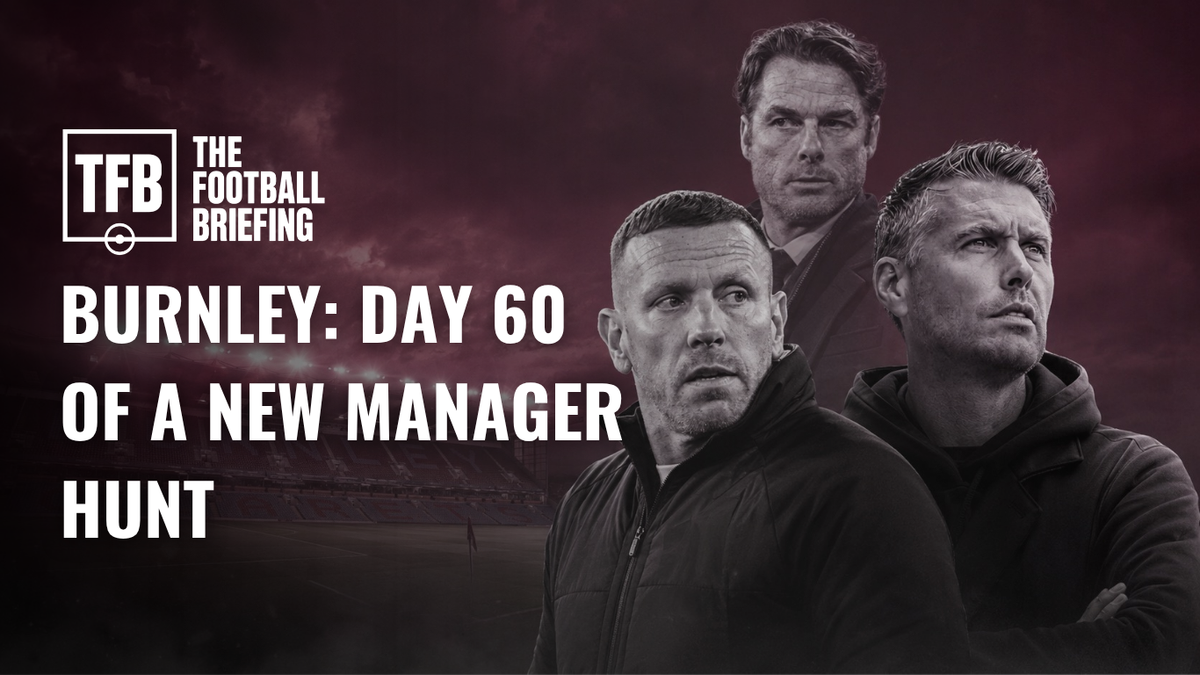
Burnley’s search for a new manager was supposed to signal clarity. Instead, it has started to look like the first test of a club that decided it wanted a new direction before fully securing the person to lead it.
Scott Parker’s departure was announced on 30 April. The wording was careful. Burnley said he had left his position as head coach “by mutual consent” and placed on record their thanks for his “professionalism, dedication and contribution”. The club also said he left “with the respect and gratitude of everyone connected with Burnley Football Club”.
Parker’s own message carried the same tone. He described it as “an immense privilege” to lead Burnley and said he felt it was “the right time for both parties to move in a different direction”.
That was the line that mattered. Burnley did not simply lose a manager. They chose a reset.
There was logic in that. Promotion had not changed the feeling that Burnley needed a more convincing Premier League identity. Parker had taken them up, but the return to the top flight was grim. They struggled to carry threat, failed to impose their game often enough, and looked too fragile once the level rose. If the ownership felt the club needed a different approach after relegation, they were entitled to make that call.
The issue is what has happened since.
As of 29 June, Burnley have been without a permanent head coach for 60 days. That is a long time in any summer. For a club trying to bounce straight back from the Championship, it is a dangerous amount of time to spend without the central football figure in place.
The managerial merry-go-round has only sharpened that concern. Craig Bellamy became the most obvious and heavily discussed candidate, partly because of his Burnley connection from the Vincent Kompany era and partly because he represented the sort of modern, intense, developmental coach the club might want to frame as a fresh start. Steve Cooper, Rob Edwards, Brian Barry-Murphy, John Eustace and Steven Gerrard have all been linked at different stages. But Bellamy appeared to become the name around which the search gathered most momentum.
That may yet be the point that defines the process.
Bellamy had obvious attractions. He knows the club. He was part of the coaching staff when Burnley were last reshaped with real conviction under Kompany. He is regarded as a serious coach, not simply a big former player, and his work with Wales has given him a senior platform. But there was always a risk in treating him as the solution.
He has never managed a club. That is not a small detail.
National-team management and club management are different jobs. With Wales, Bellamy has worked in short, intense bursts: camps, tactical blocks, limited contact time, clear tournament cycles, and a smaller pool of players bound together by national identity. Club management is relentless. It is recruitment meetings, individual player management, injuries, agents, selection politics, training rhythm, midweek travel, bad runs, contract situations, squad churn and the pressure of needing to win again three days later.
The Championship magnifies all of that. It is not simply a technical league; it is an endurance test. A coach has to manage the emotional weather of 46 games, not just prepare a team for international windows. Bellamy may well have the qualities to do it, but appointing him would always have required Burnley to accept a degree of uncertainty.
That uncertainty appears to have extended beyond Bellamy himself. The collapse of talks was not thought to centre on compensation with the Welsh FA. The more significant issue was believed to be around whether he could bring the staff he wanted with him to Turf Moor. That matters because a first-time club manager is rarely just an individual appointment. The staff around him can be the difference between an exciting idea and a functioning football operation.
If Burnley spent too long trying to solve that puzzle, the criticism becomes stronger. The question is not whether Bellamy was worth exploring. He was. The question is whether the club placed too many eggs in one basket, allowed one preferred route to dominate the search, and then found itself returning to the wider market after valuable planning time had already disappeared.
That is where the ownership’s judgement will be scrutinised.
Burnley’s statement in April said “the process of appointing a new permanent head coach ahead of the 2026/27 season has begun”. Supporters could reasonably have expected that process to be well advanced by early summer. Instead, players are today back in pre-season training with no permanent manager, no settled voice, and no obvious public sense of the team Burnley are trying to become.
That is not just optics. Pre-season is when authority is established. It is when a manager starts to frame the season emotionally and tactically. It is when players learn whether they are central, peripheral or surplus. It is when recruitment becomes more precise because the club knows what profile of goalkeeper, centre-back, midfielder and forward is required.
Without the manager, there is a danger of decisions being made around a gap. A recruitment department can identify talent, but it still needs a football plan to recruit into. Burnley cannot afford to build a squad for one style and appoint a coach whose instincts point elsewhere.
This is why Parker’s exit becomes more complicated the longer the vacancy runs.
Parker was not a perfect answer. Burnley’s Premier League season made that clear. But he was a proven Championship operator. He has won promotion with Fulham, Bournemouth and Burnley. His Clarets side were not always expansive, but they were brutally effective: hard to beat, structurally sound and emotionally stable across the long grind of the division.
There is a strong argument that Parker deserved a fairer crack at leading the reset, at least from the perspective of Championship promotion. If the only question was who could get Burnley back up, his case was obvious. He had already done it. He understood the league, knew the squad, and had built a level of defensive control that very few Championship teams could live with.
The counter-argument is that Burnley did not only want promotion. They wanted a better answer to the Premier League problem. That is the tension at the heart of this decision. Parker had solved the first problem and failed badly at the second. Burnley decided the second problem mattered enough to move on.
That is fair, but only if the next step is decisive.
At the moment, it does not look decisive. It looks delayed.
The comparison with West Ham is uncomfortable because Burnley begin their Championship season against them at Turf Moor on Sunday 16 August. West Ham also endured relegation. Their Premier League return was dire enough to demand a review. But they have made their managerial decision. Nuno Espírito Santo has been given the responsibility to lead them back.
That gives West Ham something Burnley currently lack: a defined point of authority. Nuno can shape pre-season, set expectations, influence recruitment and speak to players with the certainty of a man who knows the job is his. He also knows this division’s demands, having previously built a promotion-winning Wolves side. Whether West Ham are stable enough as a club is a different question, but managerially they have made their call.
Burnley are still trying to make theirs.
Are they doomed to miss out on promotion? No. That would be too dramatic. Burnley still have a strong Championship platform. They have parachute-payment advantages, recent promotion experience and players who know what it takes to dominate this division. The squad should still be among the best in the league if enough of it is retained and sharpened properly.
But they have made the task harder than it needed to be.
The next appointment has to bring immediate clarity in three areas.
First, Burnley need a playing identity that is built for the squad they actually have, not the squad they imagine. A coach can want possession, pressing and front-foot football, but the Championship quickly exposes ideas that are not supported by personnel. If Burnley appoint a high-control coach, they need technical defenders, midfield security and a goalkeeper comfortable under pressure. If they appoint a more pragmatic promotion specialist, they need to accept the trade-offs and build around efficiency.
Second, they need to settle the spine of the team. Burnley’s promotion under Parker was rooted in defensive reliability. If that platform is weakened by departures or uncertainty, the next manager will need reinforcements quickly. The goalkeeping situation, central defence and midfield balance are not details; they are the framework of a promotion campaign.
Third, they need more attacking certainty. Burnley cannot assume that defensive control alone will carry them again, particularly after a Premier League season in which chance creation and penalty-box presence were regular problems. The Championship is full of teams happy to sit in, disrupt rhythm and turn matches into scraps. Burnley need reliable routes to goal: wide threat, set-piece strength, a striker who fits the model, and midfielders who can change the tempo.
The manager must tie all of that together. Without him, the club can only prepare in fragments.
That is why the Bellamy episode feels important. If he was the first choice, Burnley needed to know early whether the practicalities worked: compensation, staff, authority, recruitment input and his willingness to leave Wales. If those questions were still unresolved deep into June, the process was carrying too much risk. A club can admire a candidate and still protect itself with parallel planning.
The best-run searches rarely look like a chase. They look calm because the club has already mapped the market, ranked candidates, assessed backroom structures and stress-tested availability before the vacancy becomes urgent. Burnley may well have done more work behind the scenes than is visible, but the public shape of this search does not project that.
It projects a club that wanted change, focused heavily on one route, and is now having to re-open possibilities.
That does not make the ownership naïve in ambition. Wanting a different direction after relegation is not naïve. Wanting a coach who can develop players and offer a better long-term Premier League plan is not naïve either. The naïvety, if it exists, lies in underestimating how unforgiving the Championship calendar is.
This league does not wait for clubs to finish their thinking.
By the time Burnley face West Ham, the new manager will need to have done more than introduce himself. He will need to have made decisions on the squad, influenced the transfer window, set the tone in training and convinced players bruised by relegation that this is a promotion project with direction. Every week lost now compresses that work.
Parker’s legacy at Burnley may improve the longer this vacancy continues. He did not prove he could keep them in the Premier League, but he did prove he could get them there. If Burnley replace him with a coach who gives them a clearer long-term identity, the decision will look brave. If they drift into July and end up making a compromise appointment, it will look careless.
The job remains one of the best in the Championship. It is also becoming more difficult by the day.
Burnley wanted a new direction. Now they need to show they actually know what that direction is.