
England arrived at the Azteca, and this time the chaos did not break them

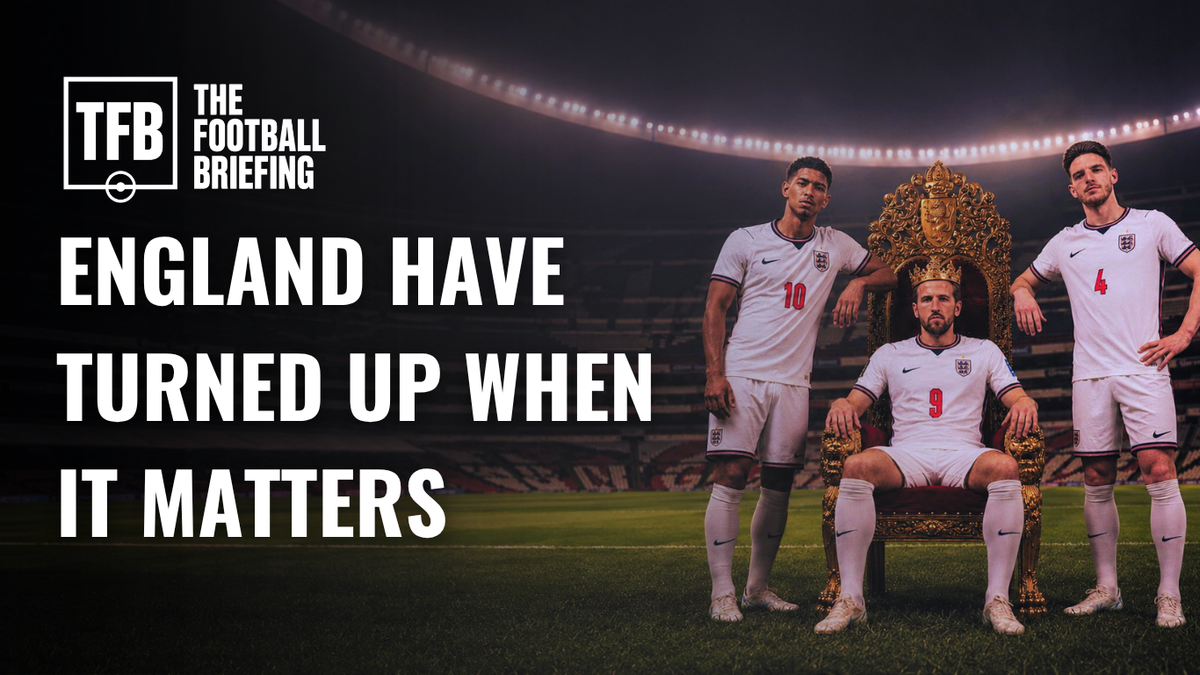
There are wins that move a team through a tournament, and wins that change the mood around it. England’s 3-2 victory over Mexico at the Azteca did both.
Until now, Thomas Tuchel’s side had been effective rather than stirring. They had beaten Croatia, drawn with Ghana, seen off Panama and then needed two late Harry Kane goals to recover against DR Congo. Respectable progress, certainly, but not enough to make the rest of the field shift in their seats.
Mexico City changed that.
This was not simply a last-16 tie. It was Mexico, in Mexico, at the Azteca, at altitude, in front of a crowd that turned the night into something closer to a national event than a football match. England had already been given a hostile welcome at their hotel, with supporters gathering outside in the early hours with music, horns and fireworks. Then the kick-off was delayed by an hour because of severe weather, stretching the tension and pushing an already charged evening deeper into the night.
There was history everywhere. England’s previous World Cup visit to the stadium was the 1986 quarter-final defeat by Argentina, still inseparable from Diego Maradona and English football’s collective memory. Mexico had never lost a World Cup match at the Mexico City Stadium before this game. Their Azteca World Cup record stood at eight wins and two draws, and they had reached this point of the tournament without conceding.
So when England won here, with ten men, through the noise, the red card, the penalties and the moment when the home crowd sensed the match turning, it felt like more than survival.
It felt like arrival.
The first half showed the England Tuchel has been trying to shape: compact enough to live without control, sharp enough to punish space as soon as it appears. Mexico began with the energy the occasion demanded and almost struck early, Raúl Jiménez’s diving header forcing Jordan Pickford into a sharp save from Roberto Alvarado’s cross.
That save looked more important as the match unfolded. Pickford was not just busy. He was settling England.
The opening goal was a neat collision of patience and vertical instinct. Pickford claimed a Mexico chip, released Declan Rice, and Rice carried the ball deep into Mexican territory. Bukayo Saka’s cross from the right was precise, but Jude Bellingham’s run gave it value. He arrived with the certainty of a forward, stooping to head beyond Raúl Rangel.
The second came 98 seconds later. England pressed straight from the restart, Elliot Anderson squeezed the ball into Kane, and the captain’s low delivery left Bellingham with a tap-in from six yards.
Mexico had not conceded in the tournament. England put two past them in less than two minutes.
Bellingham’s influence went beyond the goals. In a stadium designed to make opponents feel small, he looked unusually comfortable with the scale of it all. He attacked the box like a striker, carried himself like a leader and, when the game demanded it, defended like a centre-back. This may not have been the most technically complete performance of his England career, but it was one of his most complete tournament displays: goals, duels, recovery runs, judgement and presence.
Anthony Gordon’s contribution should not be lost beneath the Bellingham glare. His early shot was England’s first real sign of threat, and his direct running mattered in a match where long spells of pressure had to be broken by someone prepared to carry the ball into open grass. Later, he won the penalty that allowed Kane to restore England’s two-goal lead. He brought sparkle without drifting away from the work.
Mexico’s response before half-time changed the tone. Julián Quiñones volleyed in after England failed to clear a free-kick, and the Azteca immediately became louder, tighter, less forgiving. The final stretch of the half became England’s first real test of nerve. Jiménez dragged one effort wide, then forced Pickford into a brilliant save with a glancing header. From the resulting corner, César Montes looked set to score before Bellingham appeared in the six-yard box to clear.
Those minutes stopped the night becoming a story about control. England were not controlling it. They were absorbing it, suffering through it and finding the next action.
That is a different tournament skill.
The second half took the match somewhere stranger. Nico O’Reilly struck the base of the post soon after the restart, an opportunity that could have given England a 3-1 lead and, perhaps, a cleaner night. Instead, in the 54th minute, Jarell Quansah was sent off after a VAR review for a challenge on Jesús Gallardo. The referee initially saw nothing wrong with it. The review changed everything.
Tuchel reacted quickly. John Stones replaced Saka three minutes later, a substitution that redrew England’s priorities. They were no longer trying to threaten evenly across the pitch. They needed another defender, another organiser, someone to reset the line while the match was still spinning.
Then came another twist. Gordon chased Kane’s knock-down, reached the ball before Rangel and was brought down. Kane scored from the spot on the hour, a captain’s intervention at precisely the moment England might have lost their composure.
The comfort lasted only briefly. Kane was then penalised at the other end after another VAR review, and Jiménez converted Mexico’s penalty in the 69th minute.
From there, England’s performance became forensic in a way that will have pleased Tuchel more than any long passing sequence. Dan Burn and Djed Spence came on after the second hydration break to strengthen the defence, with Morgan Rogers later replacing Kane in stoppage time. England dropped into a low, narrow, stubborn shape, with Burn and Spence helping form the five-man structure needed to protect the box.
The numbers show the scale of the defending. England had only 33.2 per cent possession, their lowest share in a World Cup match since records began in 1966, and made 49 clearances, their most in a World Cup game since the 1990 third-place play-off against Belgium. Mexico had 20 shots, five of them on target.
But this was not panic. It was desperation in circumstance, not in method.
England protected the central lane first. Rice screened spaces rather than chasing the emotion of the game. Stones gave the back line calm. Marc Guéhi and Ezri Konsa defended the six-yard box with discipline. Burn added height and security at the back post. Spence gave legs to the right side when Mexico were looking to overload and cross. Bellingham and Gordon ran either side of Rice, closing enough lanes to stop Mexico playing cleanly through the middle.
The detail was in the choices. England rarely got tempted into wild pressure after Mexico’s second. They accepted territory and crosses, then made sure those crosses were contested. They protected Pickford’s sight lines where they could. They kept the distances between centre-backs and midfielders short. When they cleared, they cleared properly. When they had to foul, they tried to do it away from the most dangerous areas.
It was not pretty. It was not comfortable. But it was recognisably a Tuchel game-state plan.
Rice deserves credit for how he managed the match. Booked inside the first minute, the fourth-earliest card in World Cup history, he still played with aggression and restraint. England needed him in almost every defensive phase, so he could not simply disappear from contact. He also helped create the first goal with the sort of ball-carrying run that often gets lost when the final touch belongs to someone else.
Pickford was outstanding. This was his 17th World Cup appearance, drawing him level with Peter Shilton for England men’s World Cup appearances, and it became one of those nights that strengthens his tournament legacy. His early save from Jiménez mattered. His later save from the same player, stretching high to his right, mattered even more.
Goalkeepers in tournament football are often remembered for penalties. Pickford’s best work here was about timing: keeping England level early, keeping them ahead before the break, and refusing to let the match tip into chaos when Mexico started pushing everything into the box.
Kane’s leadership was messier but still vital. He provided the low cross for Bellingham’s second, scored the penalty after England had gone down to ten, and gave the team a reference point even when he was too isolated to hold possession for long. The penalty he conceded gave Mexico their route back in, but his overall influence remained essential. This was a captain’s game less because of polish than durability.
There was also a sour footnote involving Jordan Henderson. After the final whistle, he suffered a wrist injury during the celebrations and was taken to hospital, with Tuchel later describing it as serious. Even the celebrations carried bruises.
Tuchel’s words afterwards were simple. “This team really mean it,” he said. Bellingham, reflecting on the pressure, said England had “stuck together right until the last second”. Neither phrase needed much decoration. The match had already made the point.
The comparison with 2018 and 2022 is unavoidable. England reached the semi-final in Russia and the quarter-final in Qatar, and both tournaments changed expectations around the national team. The 2018 side had freshness, set-piece threat and a restored bond with supporters. The 2022 team had more technical maturity and looked closer to the best nations.
This Tuchel version may not yet be as smooth as England were in parts of 2022. Tuchel admitted after Mexico that England “can play much better”. He was right. There were long periods here when England could not keep the ball, and Norway will have seen areas to attack, particularly with Quansah suspended and the right side of the defence needing another solution.
Still, Mexico City revealed something else. England did not need the match to be clean. They did not need the atmosphere to settle. They did not need the weather, the crowd, the referee or the game-state to favour them.
They found a way through a night built to expose them.
That is the part that feels different. Tournament winners are rarely flawless. They tend to be adaptable, deep, stable under pressure and capable of finding match-winning actions from elite players in awkward moments. England had all of that at the Azteca: Bellingham’s brilliance, Kane’s nerve, Pickford’s authority, Rice’s doggedness, Gordon’s vertical threat and Tuchel’s willingness to alter the structure without apology.
Now comes Norway, and nobody should treat that as a soft landing. The assumption had been that England, if they survived Mexico, would probably be looking at Brazil in Miami. Instead, Norway produced one of the shocks of the tournament, beating Brazil 2-1 with two late Erling Haaland goals to reach their first World Cup quarter-final. England will face them in Miami on Saturday 11 July at 10pm BST.
Norway will be different from Mexico. They will not bring the same home-crowd pressure or altitude, but they bring clarity. Haaland is the obvious danger, especially after moving to seven goals for the tournament. Martin Ødegaard gives them rhythm and timing between the lines. Sander Berge provides midfield size and control. Kristoffer Ajer, Julian Ryerson and David Møller Wolfe started in the back line against Brazil, while Andreas Schjelderup came from the bench to assist both Haaland goals.
There is familiarity on both sides. England know Haaland and Ødegaard as well as any international opponents can. Norway know plenty about England’s players, tempo and habits through Premier League exposure. That may make the quarter-final more tactical than emotional: less about surviving a storm, more about controlling distances around Haaland, denying Ødegaard the angles he wants and making Norway defend the full width of the pitch.
Did England show they could go all the way? Yes, in the only sensible meaning of the question.
They did not prove they will win the World Cup. They proved they have the ingredients to stay alive when the tournament becomes hostile and irrational.
The best version of England may still be ahead of them. Tuchel believes there is a gap between what they are producing and what they can become. Against Mexico, that gap did not cost them. Their character filled it.
At the Azteca, England did not just beat Mexico. They beat the noise, the altitude, the delay, the history, the red card and the moment when the match threatened to run away from them.
That is how teams arrive.