Forest have rolled the dice again, but this time the gamble says more about ambition than panic

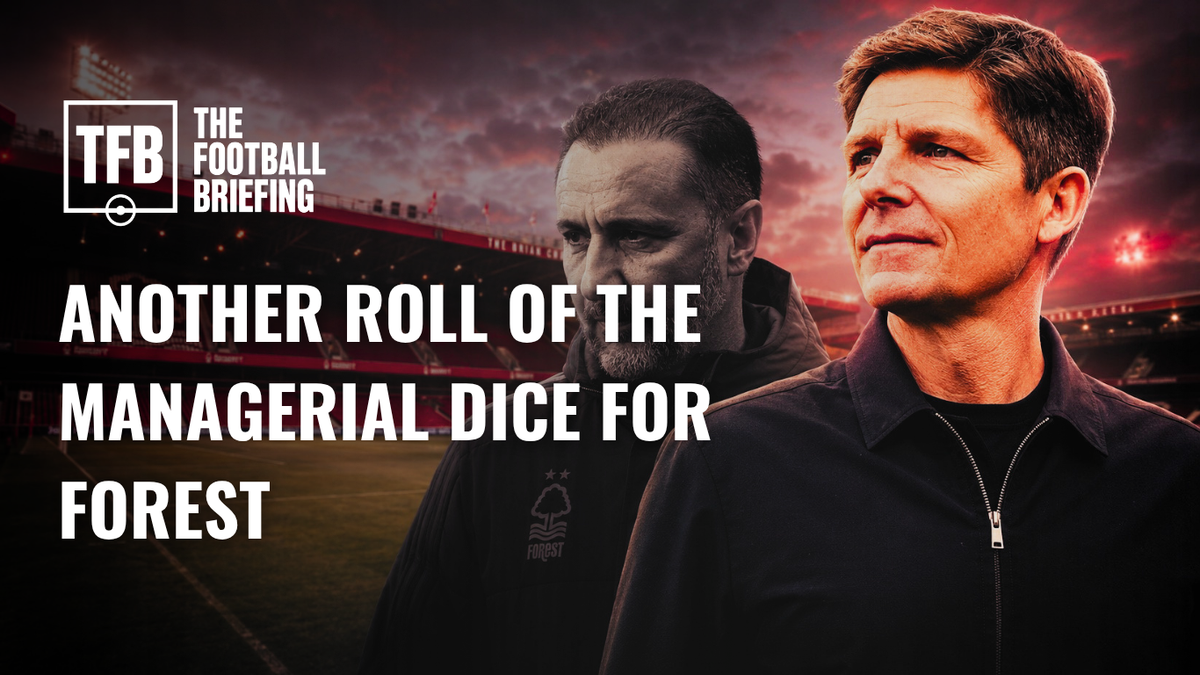
Nottingham Forest’s decision to part company with Vítor Pereira looks brutal because, on the surface, it contradicts the evidence of the previous four months.
Pereira arrived in February as the fourth head coach of a season that already felt unmanageable. Forest were not looking for a philosopher then. They needed order, clarity and enough points to keep the floor from giving way. Pereira gave them that. He steadied the side, restored a degree of belief, kept them in the Premier League and took them deep into the Europa League.
For a club that had spent much of the campaign moving from one emergency to the next, that should have been enough to earn him a pre-season.
Instead, he has gone before it properly began.
The official explanation is clean and contractual. Forest exercised a break clause. The club thanked Pereira and his staff for their work, dedication and the foundations they had helped to provide. It was respectful in tone but sparse in detail, which is usually where the real story begins.
This was not a sacking born out of relegation, mutiny or visible tactical collapse. It appears to have been a calculated decision taken in the narrow space between one season’s escape and the next season’s planning. Forest have not removed Pereira because he failed at the job they gave him in February. They have removed him because, once the danger passed, they seem to have decided they wanted a different manager for the job beginning in July.
That is what makes the timing so sharp. Less than two weeks before confirmation of his exit, Forest were still presenting pre-season plans with Pereira at the centre. A Portugal camp had been announced. Friendlies had been arranged. Local coverage around the club treated his future as a live issue, but not one obviously heading towards an immediate end. From the outside, it was reasonable to assume Pereira had bought himself the summer.
In football, though, contractual windows have their own gravity. If a break clause exists until the end of June, the final days of June become decision time. Forest did not have to conclude that Pereira had failed. They only had to conclude that the opportunity cost of keeping him had become too high.
That is where Oliver Glasner enters the picture.
Glasner has not yet been announced by Forest, so the language around him still needs care. But if he is the man they are moving towards, the logic is not difficult to follow. He is available. He has Premier League experience. He has recent European success. He has shown he can build a team with aggression, structure and a clear identity without the resources of the league’s richest clubs.
For a Forest hierarchy that has spent heavily, changed often and still appears to be searching for a sustainable football model, Glasner would represent more than a replacement. He would be an attempted upgrade.
The problem is that Forest have been here before — not with Glasner specifically, but with the feeling that the next appointment will finally turn volatility into direction.
That is why this change has landed with force among supporters. Pereira was not a beloved long-term figure in the way Steve Cooper became, but he did something valuable: he made Forest feel coherent again. His team played with more courage. Morgan Gibbs-White looked influential in areas that mattered. The front line carried a sharper threat. Forest were not always smooth, but they were no longer drifting. In a season when drift had become the theme, that was a genuine achievement.
Pereira’s best work was not cosmetic. He inherited a squad that had been pulled between different ideas. Nuno Espírito Santo’s pragmatism, Ange Postecoglou’s expansive instincts, Sean Dyche’s survival structure and Pereira’s own adjustments all left traces. Forest’s players had been asked to absorb too many languages in too little time.
Pereira simplified without making them passive. He found ways to release attacking players while keeping the side attached to the basic requirements of a relegation fight: compactness, aggression and set-piece concentration.
That he leaves after doing that is not irrational in football’s modern economy. But it is ruthless.
Forest’s managerial turnover is often described as chaos, and at times it has deserved that label. Yet it may be more precise to call it impatience mixed with opportunism. Evangelos Marinakis does not run Forest like a club content to let medium-term plans breathe through discomfort. He sees danger and acts. He sees a perceived upgrade and acts again.
The upside is obvious enough. Forest are back in the Premier League, have re-established themselves on a larger stage and are no longer operating with the timid mentality of a club merely grateful to be here. The downside is just as visible: every new manager inherits not only a squad, but the residue of the last experiment.
That is why the roulette-wheel image fits, even if it can be too easy. This is not random spinning. Forest’s decisions usually have a logic. The issue is that the logic changes too quickly. One month the club need a stabiliser. Then they need an ideologue. Then they need a survival specialist. Then they need a European-level organiser.
Each appointment can be defended in isolation. Put together, they ask a harder question: what exactly is Forest’s football identity supposed to be?
If Glasner arrives, he will bring one. His best teams are not vague. They press with purpose, defend with numbers behind the ball when required and attack quickly into spaces that have been deliberately created. He is associated with back-three structures, wing-back width, vertical transitions and a front line that can apply pressure as well as finish moves. At Crystal Palace, his side could be direct without being crude, intense without becoming reckless. He also has enough tactical flexibility to avoid being reduced to a formation on a tactics board.
Forest’s squad contains elements that could suit him: athletic defenders, runners, players comfortable attacking transition spaces and forwards who can give a team reference points. The City Ground, when connected to a team with aggression and momentum, would not be a difficult place for Glasner’s football to find an audience.
But the Palace question cannot be ignored.
Glasner’s time in south London brought historic success, but it also exposed the conditions he expects. He did not simply want to coach whoever remained after the board had finished trading. He wanted alignment, support and a squad that reflected the demands placed on it. When he felt those conditions were slipping, his language became unusually pointed. He had already decided he would not extend his stay, and the tension around recruitment and squad planning became part of the final act.
Would Forest be easier?
In some respects, yes. Forest are more willing to act aggressively in the market than Palace have traditionally been. They are not short of ambition. Marinakis is not a passive owner. If Glasner wants proof that the club intend to compete, he will find more appetite at Forest than at many Premier League clubs in a similar position.
In other respects, it could be more complicated. Palace’s frustration for Glasner seemed to be about restraint and timing. Forest’s challenge is more about intensity and control. At Palace, he sometimes appeared to want more backing. At Forest, he may have to manage the consequences of backing that comes with heavy expectation and abrupt judgement. A manager who wants alignment may find resources attractive, but resources are not the same as patience.
That is the heart of the gamble. Forest may believe Glasner offers a higher ceiling than Pereira. Many would understand that argument. Glasner’s recent body of work gives him a strong case. But if the club are appointing him to provide long-term stability, they must accept that stability is not created by the coach alone. It has to be protected by the board, the recruitment department and the owner when results flatten, injuries hit or the first tactical transition looks untidy.
Pereira’s exit shows Forest can be unsentimental even when a manager has delivered. Glasner, if appointed, will know that before he signs his first team sheet.
The most generous reading of Forest’s move is that they have acted early because they did not want to waste a summer. Better to make the uncomfortable decision now than in September, after transfers have been made for one manager and results have begun to sour under another. If they were unconvinced Pereira was the right long-term fit, pre-season was the last responsible moment to change. That argument has merit.
The less flattering reading is that Forest have again allowed possibility to overpower continuity. Pereira had earned the right to build on the recovery he engineered. Players who had responded to him must now reset. Staff relationships will change. Recruitment priorities may shift. The club will ask the squad to accept another new voice and another new version of the future.
Both readings can be true.
Pereira was sacked because Forest saw a contractual opening, a market opportunity and a potential ceiling they preferred elsewhere. He was not sacked because his rescue mission failed. That is what makes this such a revealing moment. Forest are no longer behaving like a club whose only ambition is survival. They are behaving like one impatient to accelerate into the next bracket, even if the road there keeps bending sharply.
The risk is that constant acceleration becomes instability by another name.
If Glasner comes in and is properly backed, Forest may get more than they hoped for: a coach with European credibility, tactical authority and the force of personality to turn a talented but bruised squad into something more durable.
If they treat him as the next spin of the wheel, they may simply repeat the cycle with a more expensive chip on the table.
Pereira leaves having done the job Forest needed at the moment they needed it. The next appointment will tell us whether Forest have learned from that, or whether they have mistaken motion for progress again.