Everton have signed Hayden Hackney for what their midfield has been missing

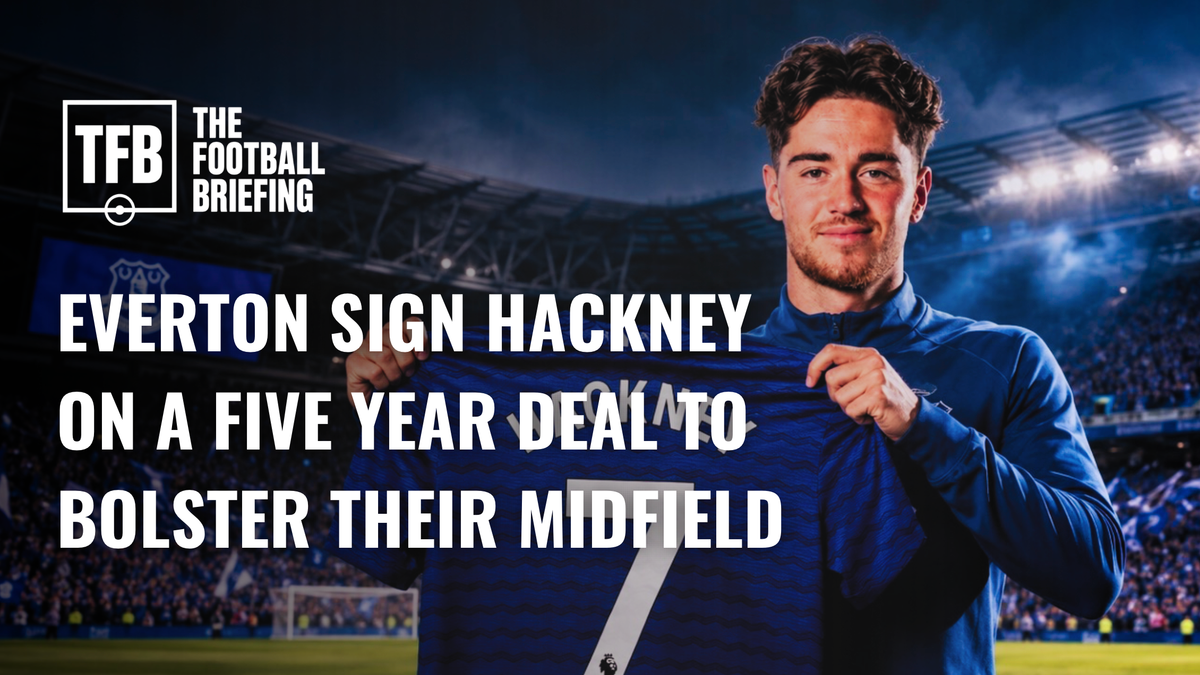
Everton’s signing of Hayden Hackney from Middlesbrough feels less like a speculative Championship punt and more like a targeted attempt to change the texture of David Moyes’ midfield.
The club have confirmed the arrival of the 24-year-old midfielder on a five-year contract, adding one of the Championship’s standout players to a squad that needed more than legs, tackles and defensive resilience in the middle of the pitch. Hackney arrives with those qualities, but Everton’s interest is really about what happens before the tackle: receiving under pressure, moving the ball early, connecting phases of play and giving the team a calmer route through midfield.
Speaking to evertontv via the Everton website, Hackney said it was “always going to be Everton” once he had spoken to the manager and understood the club’s interest. He also pointed to the direction of the club, the new stadium and Moyes’ record of helping players make the jump from the Championship to the Premier League.
That last point is worth lingering on because it explains much of the thinking behind the deal. Moyes has rarely been seduced by name value alone. At his best, his recruitment has been built around players with repeatable habits: those who can handle intensity, adapt to role detail and carry room for development. Hackney fits that mould. He is not a teenager being bought on promise, nor an expensive Premier League-ready guarantee. He sits in the more interesting space between the two: old enough to have substance, young enough to be shaped.
Everton’s midfield has too often lacked a natural connector. The side have had workers, ball-winners and players capable of playing with discipline, but there has been a recurring need for someone who can take possession in central areas and move the team forward without the game becoming stretched too quickly. Hackney’s value is in that middle ground. He is comfortable coming towards the ball, but he does not simply recycle it sideways. He can play as a deeper midfielder, but his game is not limited to screening the back four. He can operate as an eight, but he is not just a runner arriving beyond the striker.
His final season at Middlesbrough makes the rationale clearer. FotMob recorded Hackney with five goals and seven assists in 3,314 Championship minutes, with an average rating of 7.64. He also led Middlesbrough for chances created, with 83 at a rate of 2.3 per 90 minutes. For a midfielder who is not an orthodox number 10, that is significant.
Those numbers show a player involved in the earlier stages of attacks as well as the final action. Everton have needed more of that. Too often, their best attacking moments have depended on territory, set-pieces, second balls or direct play into wide areas. There is nothing wrong with that as a foundation, particularly under Moyes, but the next step is having a midfielder who can help the team stay on the ball for longer and pick better moments to accelerate.
Hackney’s passing numbers support that view. FotMob had him completing 57.1 accurate passes per 90 for Middlesbrough, at a pass success rate of 86.5 per cent. Context matters, of course. The Championship is not the Premier League, and Middlesbrough’s structure gave him plenty of responsibility in possession. But that responsibility is part of the attraction. Everton are not signing a passenger from a dominant side; they are signing a midfielder who was trusted to dictate rhythm, create chances and carry a heavy weekly load.
The EFL recognised that influence by naming him the Championship Player of the Season for 2025/26. Individual awards should never be treated as scouting reports, but in this case the recognition broadly aligns with the profile. Hackney was not merely productive in isolated moments. He was central to how Boro played.
There is also a defensive argument for the transfer, although it should not be overstated. Hackney is not a specialist destroyer and Everton should be careful not to frame him as one. His defensive value comes more from mobility, anticipation and repeated involvement than from being a pure holding midfielder. FotMob credited him with 205 ball recoveries in the Championship campaign, an indication of how often he was close enough to the action to help Boro regain control.
That blend is probably why Everton have moved. A midfielder who only creates might be hard to accommodate in a Moyes side. A midfielder who only tackles would not solve Everton’s possession issues. Hackney offers enough of both to give the manager options.
The obvious question is where he plays. At Middlesbrough, he was used in roles that asked him to build, press, carry and arrive. At Everton, his cleanest fit may be as one of the two deeper midfielders in a 4-2-3-1, especially alongside a more positionally conservative partner. That would allow him to receive from the centre-backs, step into the next line and still have licence to join attacks when the ball is secured.
There is another possible route, too. Against sides Everton expect to compete with for territory, Hackney could operate slightly higher as an eight, giving Moyes a midfielder who can press forward while still helping the side retain possession. In games where Everton need greater control, he could become the player who slows the tempo, draws pressure and releases the ball into the full-back, winger or attacking midfielder at the right moment.
Hackney himself described his game, speaking to evertontv via the Everton website, as offering “a bit of everything” both in attack and defensively. That is usually a phrase to treat with caution, but in his case it is close to the point. Everton have not signed him because he is the best in the division at one narrow thing. They have signed him because his skill set covers several of the gaps that have made their midfield look functional rather than fluent.
There are risks. The Premier League will test his speed of decision-making. He will have less time to receive on the half-turn, fewer forgiving moments after loose touches and more athletic opponents closing the space around him. The first few months may require patience, especially if Everton ask him to carry too much of the ball progression too quickly.
The physical jump is also real. Championship midfielders often arrive with excellent volume, but Premier League matches can be less forgiving in the timing of duels and the punishment for positional errors. Hackney will need to learn when not to force the next pass, when to protect the ball and when to accept that a simple action is the best action.
Still, this is precisely the sort of signing Everton should be making. Not because every Championship player is undervalued, and not because one strong season automatically translates upwards, but because Hackney’s strengths map neatly onto Everton’s needs. He improves the technical level of midfield without removing the edge Moyes wants. He is young enough to grow with the side but experienced enough not to be treated as a development project.
There is a wider squad-building point here. Everton have spent recent years needing to be sharper, more disciplined and more deliberate in the market. Hackney looks like a football-led signing rather than a reaction to noise. He has a clear role, a clear age profile and a clear pathway into the team.
If he settles, Everton gain a midfielder who can make them less predictable. Not necessarily more expansive overnight, but more capable of playing through pressure rather than around it. For a club trying to move into a new era with a clearer identity, that matters.
Hackney has earned his Premier League opportunity. Everton, meanwhile, have signed a player who appears to understand why the move makes sense for him as much as for the club. The next step is turning Championship authority into Premier League reliability.
For Moyes, that will be the challenge. For Everton, it may be one of the more quietly important deals of their summer.