France look like champions in waiting as Mbappé turns dominance into certainty

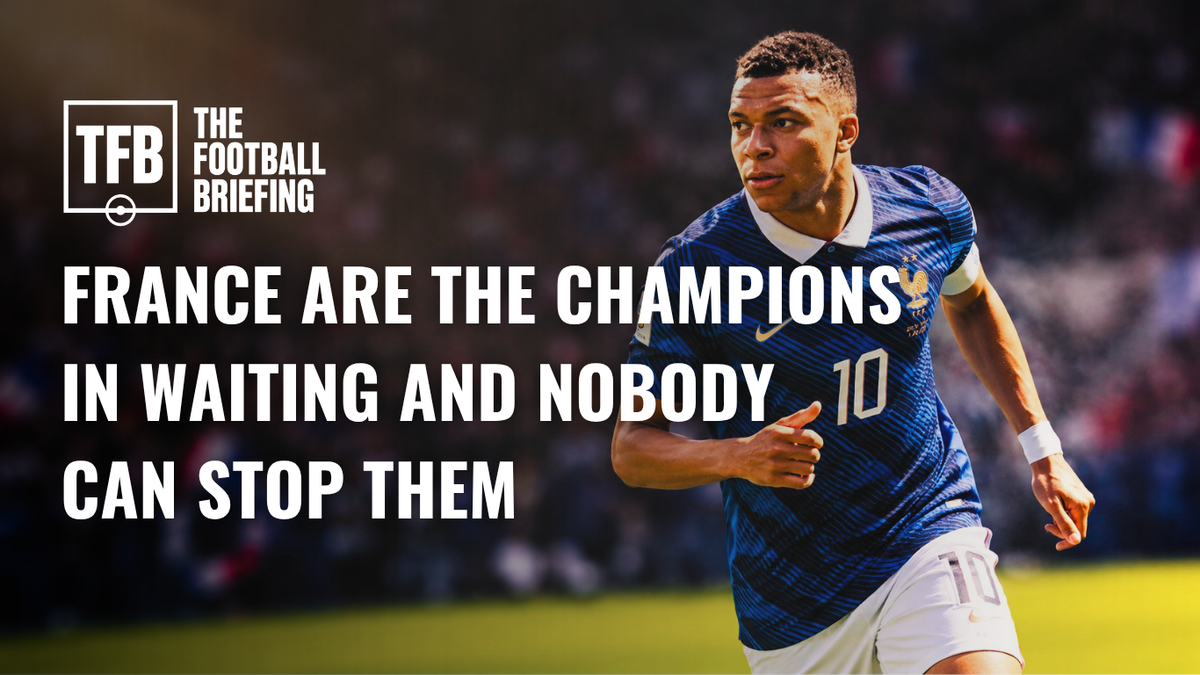
France did not so much beat Sweden as reduce the idea of a contest to something theoretical. There was a scoreline, a structure, a period before the first goal when Sweden could still pretend the game was within reach. By the end, the 3-0 felt almost modest.
Kylian Mbappé scored twice. Bradley Barcola added the second. Michael Olise created two of the three goals and played with the quiet authority of a footballer for whom the game seems to run half a second slower. France moved on, Paraguay await, and the rest of the World Cup was left with the same uncomfortable question: who is realistically stopping this side?
Football resists certainty, especially in knockout tournaments. A deflection, a red card, a penalty shootout, a moment of genius from the other side; all can disturb even the strongest team. But France are no longer favourites only because of their squad list or recent pedigree. They look like favourites because they are playing with the assurance of a side that understands its own superiority.
It may take luck, something extraordinary, or the kind of physical setback to Mbappé that France will not want to contemplate. When he is moving like this, finishing like this and carrying himself like this, the tournament appears to bend around him.
The most telling moment of the night came before the game had properly opened up. When Mbappé broke the deadlock just before half-time, he did not peel away for the usual individual celebration. He ran to Didier Deschamps.
The France manager had returned to the squad after the death of his mother, having missed the final group game against Norway to attend her funeral. Mbappé’s first instinct was to go straight to the touchline, and his team-mates followed. It was not staged. It did not look like a pre-planned tribute. It felt like a group recognising the person who has shaped so much of their international careers.
Under Deschamps, France’s great strength has often been their capacity to keep talent inside a structure. They absorb pressure, manage difficult spells and avoid the emotional chaos that consumes other nations. Against Sweden, that control carried an added layer. They were playing for a manager who has given them shape, status and continuity, and the first goal became a public show of loyalty.
Sweden did not start badly. Alexander Isak and Viktor Gyökeres offered routes forward, while Anthony Elanga gave them pace. But they could not hold the ball long enough to build around those forwards. France squeezed the pitch, recovered possession quickly and forced Sweden’s back line into repeated decisions at speed.
Once France settled, the imbalance was obvious. Their attacks arrived from too many angles. Mbappé drifted left and exploded inside. Ousmane Dembélé received high and wide, then carried the ball into the half-space. Olise kept appearing between the lines, shaping passes through defenders rather than around them. Barcola gave the attack another direct runner, and the midfield behind them allowed the front four to play freely without leaving the team exposed.
The numbers matched the feel of the game. France finished with 25 shots, 12 on target, two efforts against the woodwork and five big chances missed. Sweden’s goalkeeper was not merely busy; he was repeatedly asked to delay the inevitable.
Mbappé could have had more than two. He hit the post, had one ruled out for offside, forced saves and kept finding shooting positions that most forwards spend entire tournaments chasing. Even his misses carried menace. Sweden were not defending a player so much as trying to survive a rhythm.
His World Cup record is beginning to look absurd: 18 goals in 18 appearances, 10 in knockout matches and six already at this tournament. He is still only 27, yet his World Cup career is already being measured against the sport’s history rather than his contemporaries.
There is a temptation with Mbappé to reduce everything to pace. It remains the most obvious weapon because defenders feel it before they can solve it. But his form at this World Cup is about more than acceleration. His body shape before shooting is cleaner. His decision-making around the box is calmer. He is choosing his moments better and, when France have long spells of possession, he no longer looks detached from the collective game. He looks like its final expression.
The first goal showed the full range. He received, shifted the defender, created the angle and finished with the certainty of a player who had already seen the picture before the ball reached him. The second, from Olise’s pass, was lighter but just as ruthless. Sweden were tired by then, but tiredness is part of what France do to opponents. They stretch the pitch, ask repeated questions, then punish the first lapse in concentration.
Olise’s role in that deserves more attention. He now has five assists at this World Cup. That does not make him the outright single-tournament record holder, but it puts him one short of Pelé’s recorded six from 1970 and makes him the first player since Thomas Häßler in 1994 to reach five assists at a single men’s World Cup.
His value is not only in the final pass. Olise changes the tempo. He can slow a move down without killing it, wait for the defender to step, then release the ball at the moment the gap appears. Against Sweden, he created Barcola’s goal with a beautifully weighted pass through a crowded lane and later found Mbappé with the kind of delivery that turns a good run into a goal.
That gives France a different texture from previous Deschamps sides. The 2018 champions had devastating transition power and a superb defensive base. The 2022 finalists had Mbappé at his most explosive and enough resilience to keep finding answers, right up to the madness of the final against Argentina. This 2026 version still has the athleticism and control, but it also has a smoother creative layer around the box.
France’s World Cup dominance is now stretching across cycles. They were champions in 2018, runners-up in 2022 and have opened this tournament with four straight wins. Across their last three World Cup campaigns, they have played 18 matches and, in 90 minutes, won 15, drawn two and lost only once. The defeat was the 1-0 loss to Tunisia in 2022, when France had already qualified from the group. The drawn 2022 final against Argentina became a penalty shootout defeat, but even that night reinforced their refusal to disappear.
Under Deschamps, they have become the most reliable tournament nation in the game. Euro 2016 finalists. World Cup winners in 2018. Nations League winners in 2021. World Cup finalists again in 2022. Euro 2024 semi-finalists. Now, in 2026, they look closer to full stride than anyone else left in the competition.
The Euros have offered more friction. Switzerland knocked them out on penalties at Euro 2020 after a chaotic 3-3 draw. Spain beat them in the Euro 2024 semi-final with a level of technical quality and attacking clarity that France could not match on the night. European Championships often compress space in a way that can make France look more functional than fluent. Even there, their floor remains unusually high. They rarely collapse. They rarely look naive. They usually force opponents to produce something exceptional.
France do not need to be perfect. They can have loose spells, miss chances, allow the odd transition and still win comfortably because their margin for error is wider than everyone else’s. They have elite defenders, ball-winning midfielders, runners, creators, finishers and a bench that would improve most starting XIs at the tournament.
Paraguay will arrive with belief after eliminating Germany on penalties, and that alone demands respect. A side that has already survived one knockout upset will not see France as an impossible task. They will defend with conviction, lean into the emotional energy of their run and try to drag the game into awkward territory.
But France are a different kind of opponent. Germany can be frustrated. France can be quiet for 20 minutes and still carry three players capable of deciding the game in one movement. Paraguay may find that surviving pressure is only the first stage. The harder part is dealing with the waves that follow.
There is still a danger in declaring any team halfway to the trophy before the next round has even arrived. The World Cup has a long memory for arrogance. Yet France’s case is no longer based on reputation. It is based on what they are doing in front of everyone.
They have scored 13 goals in four matches. Mbappé is playing at a level that turns tight games into open ones. Olise has become the tournament’s most productive creator. Dembélé, Barcola and the rest of the attacking group give Deschamps variety without sacrificing balance. Behind it all sits the tournament experience of a squad that has already lived through victory, heartbreak and renewal.
Sweden were simply the latest team to discover the scale of the problem. They were not embarrassed because they lacked effort. They were overwhelmed because France are operating at a level where effort is only the entry requirement.
On nights like this, the trophy does not feel close because France say so. It feels close because everyone else can see it too.