France Look Most Complete, But This World Cup Is Already Warning the Favourites

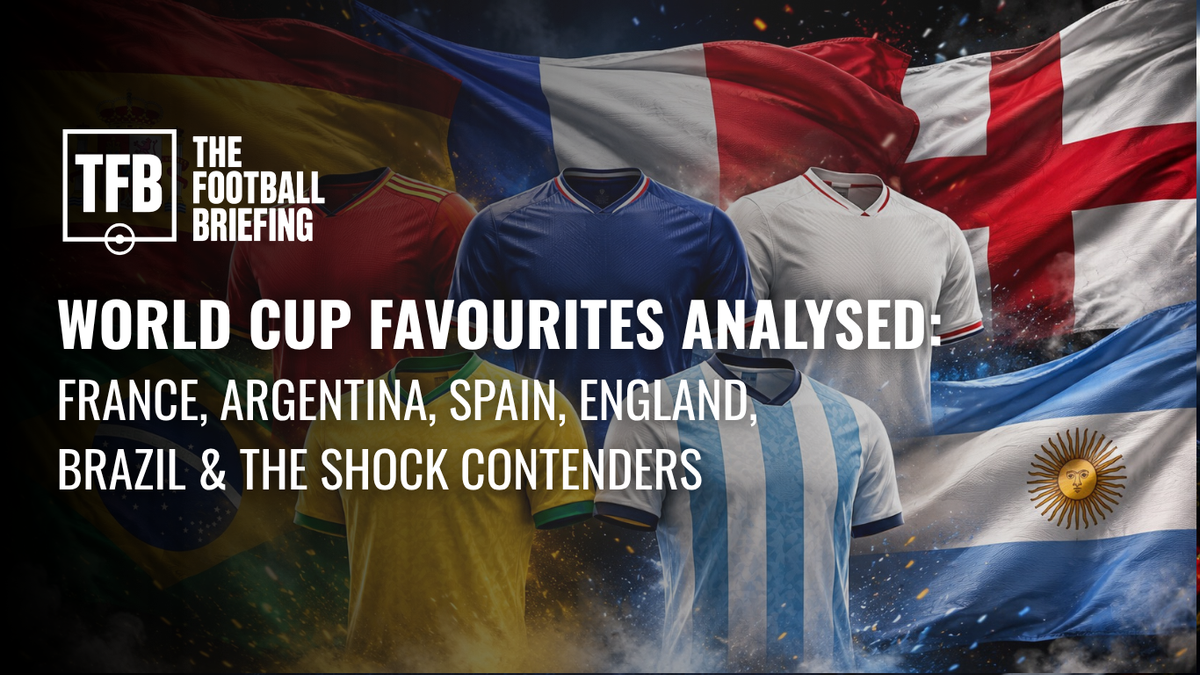
The World Cup has not produced a single obvious champion yet. That is usually a good sign.
Tournaments that look settled too early often change completely once the knockout stage begins. Group football rewards energy, freshness and style. Knockout football rewards adaptability, emotional control and the ability to survive the 15 minutes when the game turns against you. By that measure, the strongest claim so far belongs not simply to the side playing the prettiest football, but to the one that looks most equipped to win different types of matches.
Right now, that points most clearly towards France.
Before the tournament, most predictive models and markets placed Spain, France, England and Argentina near the top of the field. Sky Sports reported Opta’s pre-tournament model had Spain as favourites, followed by France and England, while a Reuters report on Goldman Sachs’ model also placed Spain first, ahead of France, Argentina and Brazil.
But the early evidence has shifted the tone. Spain may still have the highest ceiling. Argentina still have Lionel Messi shaping matches at 39. England still have the squad depth to beat anyone. Brazil are beginning to look more coherent under Carlo Ancelotti. Yet France look the side who have made the least compromise between individual quality and tournament functionality.
That matters.
France have not been flawless, but they have looked the most complete of the favourites. They opened with a 3-1 win over Senegal and followed it by beating Iraq 3-0, with Kylian Mbappe scoring twice in that second match to take them into the knockout rounds.
The interesting part is not just Mbappe’s goals. It is the range of threat around him. Reuters reported Mbappe describing this France squad as more attacking than the groups that reached the 2018 and 2022 World Cup finals, and that feels significant. France are no longer just the devastating transition side of old, waiting for space and punishing mistakes. They have more ways to build, more wide threat, more technical security and more attacking bodies who can win a match without needing the team to be perfect.
That is why they currently look like the benchmark. In tournament football, the best side is not always the most fluent. It is the one that can score early, score late, protect a lead, change the rhythm and survive bad spells without losing its identity. France have enough athleticism to play without the ball and enough quality to dominate it.
Argentina’s claim is more romantic, but also more complicated.
On paper, the holders have made one of the strongest starts. They beat Algeria 3-0, then Austria 2-0, and qualified for the knockout stage with a game to spare. Messi has already scored five goals in two matches, including a hat-trick against Algeria and both goals against Austria. Reuters reported that Argentina are expected to rotate against Jordan because top spot is already secured.
That is a powerful statement. Champions who ease through the group stage with rotation available are usually in a healthy place. Argentina still have the emotional authority of a team that knows how to win, and Messi’s form changes everything. There is a calmness to them that England, Spain and Brazil do not always possess.
The question is whether the Messi dependency is a strength or a warning. In one sense, having the tournament’s most decisive player still bending games to his rhythm is a gift no other nation can match. In another, five goals in two games from one player asks an obvious question: what happens when a knockout opponent shuts off the supply, forces him deeper, or makes the game faster and more physical?
Argentina have the know-how. They have the defensive habits of champions. They have a squad that has lived through pressure together. But the case for them rests heavily on whether Messi can remain not just influential, but match-defining, deep into July.
Spain are the opposite problem. Their ceiling may be the highest, but their first week has contained more friction than expected.
They began with a goalless draw against Cape Verde, a result that immediately challenged the idea that their technical control would automatically translate into dominance. Reuters noted Spain had almost 75 per cent possession in that match, but Cape Verde’s resistance exposed the difficulty of turning territory into goals.
Then came the response: a 4-0 win over Saudi Arabia inspired by Lamine Yamal, with Mikel Oyarzabal scoring twice. That was closer to the Spain many expected: width, tempo, positional intelligence and enough individual disruption to prevent possession becoming sterile.
Spain remain a serious favourite because they can control matches better than almost anyone. Rodri, Pedri, Dani Olmo and Yamal give them an exceptional blend of rhythm and penetration. The concern is whether they have enough directness when an opponent sits low, absorbs pressure and refuses to chase the ball. The Cape Verde game was not a disaster, but it was a clue.
England sit in a strange middle ground. They have done enough, but not yet enough to convince.
The 4-2 win over Croatia was arguably one of the most eye-catching results of the tournament’s opening phase. Harry Kane scored twice, Jude Bellingham imposed himself and Marcus Rashford delivered late attacking punch. It suggested Thomas Tuchel might have found a more ruthless England, one built to turn control into punishment.
Then Ghana held them to a 0-0 draw. England had almost 80 per cent possession in the first half but neither side managed a shot on target before the break. Ghana defended deep, denied central access and forced England into the familiar problem of possession without incision.
That does not remove England from the contender bracket. It does, however, place them beneath France and Argentina in terms of proof. England have shown they can hurt a strong opponent. They have not yet shown they can consistently solve a stubborn one.
Tuchel’s team are still built for the later rounds. Kane gives them penalty-box reliability. Bellingham gives them presence in the decisive zones. Bukayo Saka, Eberechi Eze, Morgan Rogers, Marcus Rashford and others give them bench impact. But England will be judged on whether their structure creates enough high-quality chances when matches tighten.
If England reach the quarter-finals and semi-finals, the Ghana draw may prove useful. It showed them the problem early. Now Tuchel has to show he has the answer.
Brazil are improving, but they remain hard to read.
A 1-1 draw with Morocco was not an ideal start, even if Morocco are no longer a surprise in the normal sense. Brazil then beat Haiti 3-0 and followed that with another 3-0 win over Scotland to reach the knockout stages ahead of Morocco on goal difference. Reuters also reported that Matheus Cunha’s role helped give Ancelotti’s diamond more balance against Haiti.
That is the key word: balance. Brazil’s issue has not been talent. It has been finding a shape that serves Vinicius Junior, allows central control and protects the team in defensive transition. Ancelotti is better qualified than almost anyone to solve that kind of puzzle. If Brazil keep finding stability without losing their attacking edge, they will become more dangerous as the tournament goes on.
Portugal are another side with a misleading profile. Their 1-1 draw with DR Congo raised familiar questions about possession without penetration, especially after they managed only one shot on target despite completing 740 passes. They then responded with a 5-0 win over Uzbekistan, with Cristiano Ronaldo scoring twice.
The issue with Portugal is not whether they have enough players. They have too many good ones. The question is whether Roberto Martinez can build a team that does not become emotionally centred on Ronaldo at the expense of its younger, more dynamic attackers. Portugal can win knockout ties, but they still feel more like a dangerous opponent than the most convincing champion.
So where is the shock contender?
The answer depends on the definition of shock. Morocco are the most credible outsider, but they are no longer a fairytale. A semi-final run in Qatar changed their status. Their performances here have confirmed that was not a one-off.
They drew with Brazil, beat Scotland, then came from behind twice to beat Haiti 4-2 and reach the last 32, finishing level with Brazil on seven points but behind them on goal difference. Against Scotland, Reuters described Morocco as having outmuscled them, with Ismael Saibari scoring after 71 seconds and the team completing 601 passes, the most by an African side in a World Cup match since records began in 1966.
That combination is why Morocco are dangerous. They are not just organised. They can press, dominate territory, use full-backs aggressively and manage the emotional temperature of a big occasion. Achraf Hakimi gives them elite-level thrust. Saibari has become a genuine tournament threat. Their issue is efficiency. Against better knockout opponents, dominance without conversion becomes expensive.
Colombia may be the cleaner dark-horse pick. They beat Uzbekistan 3-1, then DR Congo 1-0, and have already qualified from Group K before facing Portugal for top spot. Reuters described their campaign as a blend of attacking flair and defensive resilience, which is exactly the profile that tends to travel well in knockouts.
Colombia have less global noise around them than England, Spain, France or Argentina. That may help. They have enough individual danger to punish open games and enough competitive edge to survive awkward ones. If they top the group and avoid a brutal early route, they are the outsider who could quietly become a serious semi-final candidate.
Ecuador are the true shock name after coming from behind to beat Germany 2-1 and qualify as one of the best third-placed sides. Their coach Sebastian Beccacece called it the country’s biggest World Cup victory and said the team had kept “the exact same idea” despite a difficult start.
That is the language of a team with belief. But a shock win and a shock title challenge are different things. Ecuador can trouble anyone in a one-off match, especially with Moises Caicedo and Piero Hincapie giving them duel power and defensive authority. The harder question is whether they have enough attacking variety to win four knockout matches.
For now, the hierarchy is clearer than the noise suggests.
France have staked the strongest claim because they look the most complete. Argentina have the strongest emotional and individual case because Messi is still deciding games. Spain remain the highest-ceiling side, but they have shown a vulnerability against low blocks. England are contenders, but they need to turn control into chances more reliably. Brazil are growing. Portugal are talented but unresolved.
The shock contender is Morocco if the question is who can go deep again against the odds. It is Colombia if the question is who might be better than the wider audience has realised. It is Ecuador if the question is who has already changed the mood of the tournament.
But as things stand, France look closest to the profile of a champion: enough stars to win open games, enough structure to survive closed ones, and enough tournament scar tissue to know that the World Cup is not won by sparkling every week. It is won by being ready for the match that refuses to follow the script.