Germany and Holland are out: shock exits, or were the signs already there?

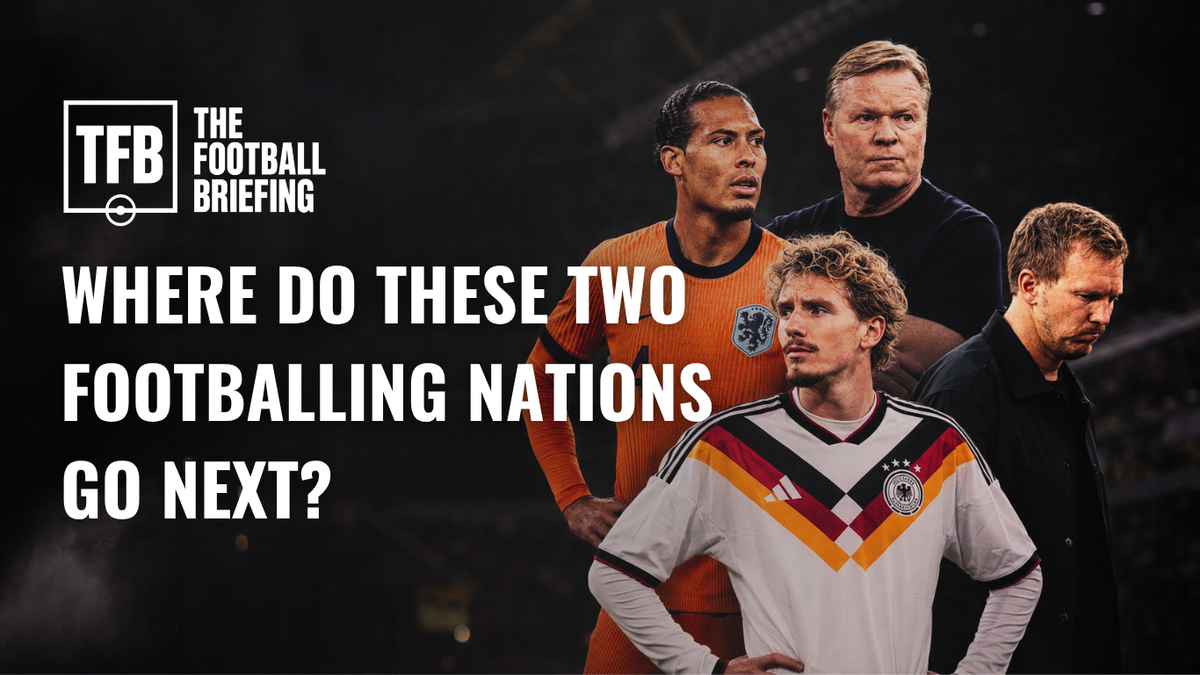
For Germany and Holland, early World Cup exits always carry disbelief.
These are not ordinary football nations. Their names sit heavily in the tournament’s history. Their shirts bring memories of finals, great players, tactical eras and teams that helped shape the modern game.
So when both disappear before the stage their supporters would consider the minimum requirement, the first reaction is shock.
Germany? Out again? Holland? Gone before the quarter-finals? Two countries with that much football pedigree left to explain why they could not go deeper into a tournament they once expected to shape.
But was it really a shock?
Look beyond the badges, the old footage and the weight of reputation, and the warning signs were there. Germany have been living with them for more than a decade. Holland have been trying to outrun them in a different way.
Both still have high-level players. Both still have enough talent to beat most teams on their day. Neither, though, carries the full authority of a true World Cup contender.
That is the difference between reputation and reality.
Germany’s fall has been the more dramatic. In 2014, they were the standard. Manuel Neuer was at his peak. Philipp Lahm gave them intelligence. Mats Hummels and Jerome Boateng anchored the defence. Bastian Schweinsteiger and Toni Kroos controlled midfield. Mesut Özil created, Thomas Müller found space that did not seem to exist, and Miroslav Klose gave them penalty-box certainty. Even Mario Götze’s winning goal in the final felt like a symbol of their depth.
Since then, the World Cup has been unforgiving. Group-stage exits in 2018 and 2022 were not just bad tournaments; they showed the old machine had stopped functioning. This latest exit extends that decline rather than interrupts a recovery.
Germany are still producing footballers of real quality. Jamal Musiala and Florian Wirtz should be central to the next era. Joshua Kimmich remains a player of serious pedigree. Antonio Rüdiger, Jonathan Tah, Nico Schlotterbeck and Malick Thiaw give them defensive options. Kai Havertz, Leroy Sané, Deniz Undav, Nick Woltemade and Maximilian Beier offer different attacking profiles.
On paper, there is enough there for a strong tournament side.
Yet Germany have not looked like Germany for some time. Not the relentless version, not the balanced version, not the ruthless version. They have had possession without enough force, technical players without enough control, attacking options without a clear spearhead, and experience without the same certainty that used to run through the team.
The return of Neuer at 40 was the most obvious symbol of that uncertainty. Neuer is one of the great goalkeepers. At his best, he changed what elite goalkeeping looked like. He was not just the last line of defence but the first organiser of Germany’s bravery, sweeping behind a high line and giving everyone ahead of him permission to play.
Calling him back at 40 also said something about the lack of a convincing succession.
It is not that Neuer alone cost Germany. That would be too simple and unfair. The point is broader. A country of Germany’s size and tradition should not need to reach so far into its past for security in such a key position.
The presence remained. The aura was not the same. Germany used to build from Neuer’s authority. This time, his selection felt more like a search for reassurance.
Musiala’s tournament will also leave questions. One goal and no assists is not a collapse, but Musiala is no longer just a young talent. He is one of the faces of the next German team, the player expected to break defensive lines, disturb compact blocks and add imagination when structure is not enough.
He did not do that consistently. There were flashes, as there usually are with him, but not enough end product and not enough influence over the biggest moments. Wirtz looked more capable of connecting Germany’s attacking play, but even he could not lift the side into the rhythm needed to control knockout football.
Sané remains another difficult case. His talent has never been in doubt, but tournaments demand more than flashes. Germany needed him to stretch opponents, frighten full-backs and deliver decisive actions. Too often, the attack still felt like a collection of possibilities rather than a settled unit.
Havertz brings intelligence and movement, but he is not a traditional centre-forward who naturally gives a team penalty-box weight. Undav, Woltemade and Beier offered alternative profiles, yet Germany still lacked the intimidating striker presence previous generations could rely on. Since Klose, they have searched for solutions rather than settled on one.
That lack of power up front has become a defining issue. Germany can pass, combine and rotate. They can produce elegant attacking midfielders. What they have lacked is a forward line that makes opponents feel physically and psychologically overwhelmed.
That used to be part of German tournament football. Even when they were not beautiful, they were hard to survive against. This side did not carry that same threat.
For Julian Nagelsmann, the question is whether he is overseeing a rebuild or becoming another manager swallowed by the same post-2014 drift. There are reasons to be patient. He inherited problems that existed before him, and this group should be better in two years’ time. But Germany do not judge managers by promising phases. They judge them by tournament progress.
A World Cup exit before the quarter-finals is not good enough for Germany. It would not have been acceptable in the past, and it is not acceptable now. The difference is that it no longer feels completely surprising.
Holland’s exit lands differently because the Netherlands have always had a more complicated relationship with the World Cup.
They are one of football’s great nations, but not because they have won the trophy. Their place in World Cup history is built on influence, style, near-misses and unforgettable players.
They were runners-up in 2010, third in 2014 and quarter-finalists in 2022, with the failure to qualify in 2018 sitting in the middle of that run like a warning light. Holland have often been good enough to dream. They have also often fallen just short.
This exit, though, felt early. It was not supposed to end here.
Ronald Koeman still had a squad with serious quality. Virgil van Dijk remains one of the defining centre-backs of his generation. Nathan Aké and Micky van de Ven offer different forms of defensive quality. Denzel Dumfries gives them thrust from wide areas. Frenkie de Jong can still make Dutch possession feel smoother and more intelligent. Ryan Gravenberch and Tijjani Reijnders give the midfield athleticism and technical range. Cody Gakpo has proved he can be productive at international level.
There is attacking depth too: Memphis Depay, Brian Brobbey, Donyell Malen, Justin Kluivert, Noa Lang, Crysencio Summerville and others all give Holland options.
But options are not clarity.
That has been the Dutch issue. They have good players, but not always a convincing attacking identity. They have defenders of stature, but not always the control to stop games drifting. They have midfielders who can pass and carry, but not always the tempo to impose themselves on knockout matches.
Koeman’s approach will be heavily scrutinised because Dutch football is never only about results. It is about what the team represents. Holland do not have to play romantic football every night, and the idea that they have always done so is a simplification. Their best modern tournament teams have often mixed talent with pragmatism.
Even so, there is a line between being pragmatic and looking inhibited.
This Holland side too often looked as though it was trying to manage risk rather than assert quality. Against strong opponents, that can be understandable. In knockout football, caution is sometimes survival. But when a team with Van Dijk, De Jong, Gakpo, Gravenberch, Reijnders, Dumfries and several dangerous forwards exits before the quarter-finals, it is fair to ask whether enough was asked of the talent available.
The underperformance was not about one player. De Jong did not dominate the tournament in the way Holland needed him to. Gakpo had moments, but not enough sustained threat to carry the attack. Brobbey did not fully seize the centre-forward role. The wide players gave bursts rather than control. Dumfries, usually such a useful outlet, was not decisive enough. Even Van Dijk, still hugely respected, could not give Holland the defensive certainty they needed at the crucial point.
That is the frustration. Holland were not short of quality. They were short of conviction.
Koeman will know what comes next. In the Netherlands, a manager can survive disappointment if there is a clear direction. What is harder to survive is the feeling that a good generation is being underused. The country’s expectation is not always to win the World Cup, but a quarter-final place should be the floor for a squad of this level. Falling below that invites pressure.
So were these exits shocks? Emotionally, yes. Historically, yes. Germany and Holland leaving early still feels wrong because football memory works slowly. It remembers the shirts before it updates the squads.
In football terms, though, this was not completely out of nowhere.
Germany have been declining at World Cups since 2014. Holland have been close to the elite without fully convincing for years. Both have lost the giant personalities of previous eras. Germany no longer have Lahm, Schweinsteiger, Kroos, Özil, Müller or Klose shaping the pitch. Holland no longer have the same elite attacking identity that came through Arjen Robben, Robin van Persie and Wesley Sneijder, or the aura that surrounded their great generations before that.
The modern teams have talent. What they lack is the same certainty of role and status.
The road to Euro 2028 now becomes critical. Germany should arrive with Musiala and Wirtz closer to their peak years, with Pavlovic, Beier, Woltemade and others potentially more established. If they solve the goalkeeper question and find a more reliable centre-forward structure, they can recover quickly. The raw material is there.
Holland also have reason to believe. Verbruggen, Van de Ven, Gravenberch, Reijnders, Gakpo, Summerville and others should still be central to the next cycle. If they can build a more aggressive attacking framework around that group, they have enough to return to the latter stages.
The next World Cup may be a fairer test of whether these exits were part of a temporary stumble or a longer decline. By then, Germany’s post-2014 era will have had enough time to become something new. Holland’s younger players will have had enough experience to carry heavier responsibility.
But neither country can rely on reputation to drag them forward.
That is the lesson of this tournament. Germany and Holland did not go out because their histories stopped mattering. They went out because history does not win knockout games. The badge can still intimidate, the anthem can still stir, the old clips can still remind everyone what these nations have been.
The question now is what they are becoming.
For two of football’s great nations, that may be the most uncomfortable part. The exits were shocking because of who they are. They were not shocking because of how they have been trending.