
Kane rescued England, but the Azteca will demand something different

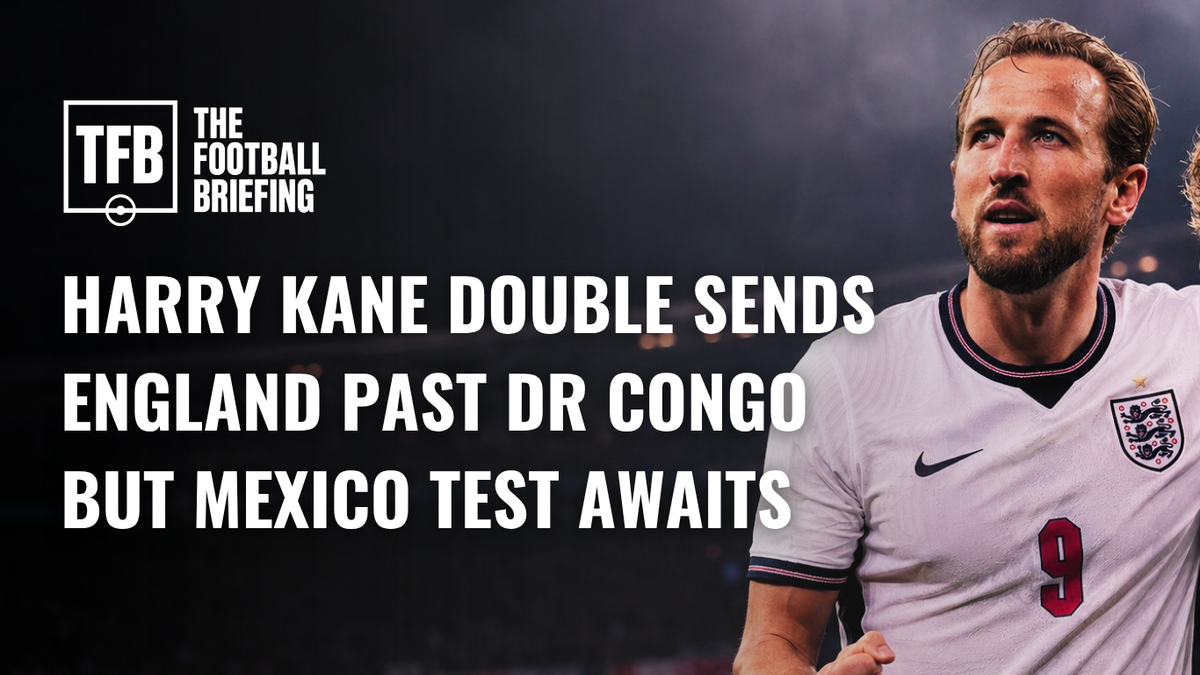
Harry Kane rescued England from a night that was drifting towards something far more damaging. Now they have to stop themselves from inviting the same trouble on a louder, thinner and less forgiving stage.
A 2-1 win over DR Congo sends Thomas Tuchel’s side into the last 16, where Mexico await in Mexico City in the early hours of Monday morning UK time. For supporters at home, it will feel like the great late Sunday night shift: 1am BST, a host nation, the Azteca, and a stadium that will not need much encouragement to sense English discomfort.
England got through. That matters most in knockout football. Kane made sure of it with two late goals, first heading in Anthony Gordon’s delivery from the left in the 75th minute before striking a superb second in the 86th, finding the top corner after Gordon again helped create the opening. The first drew him level with Pelé on 12 World Cup goals. The second moved him beyond him.
For Kane, it was another extraordinary individual chapter. For England, it was a rescue act that should not be mistaken for reassurance.
The final statistics show why this match is difficult to place. England finished with 2.04 expected goals to DR Congo’s 0.76. They had 60 per cent possession, seven shots on target to two, seven big chances created and 468 accurate passes at 91 per cent. DR Congo’s goalkeeper made five saves. England missed six big chances.
Those numbers point towards a deserved win. They also show how long England allowed the game to remain fragile.
Brian Cipenga’s seventh-minute goal gave DR Congo exactly what they wanted: belief, energy and a reason to attack the occasion rather than fear it. England were opened up too easily early on and never looked entirely comfortable when DR Congo played quickly into space. The warning became clearer when Yoane Wissa struck the post from close range in the first half. Had that gone in, England could have been 2-0 down and facing one of the most uncomfortable nights of their modern tournament history.
Kane changed the scoreline. He did not erase the evidence.
For too much of the game, England’s possession lacked urgency. The ball moved cleanly enough, but not always with purpose. Side to side, one extra touch, another recycle, another wait for the perfect gap. It looked controlled on the data sheet. It did not always feel like control on the pitch.
DR Congo had only 40 per cent possession and completed 299 passes, but when they regained the ball they wanted to go forward quickly. Their attacks were not always polished, but they carried conviction. England had more quality. DR Congo often had the clearer instinct.
That is the frustration Tuchel must confront before Mexico. England should not need to be shocked into intensity. They have too many elite players, too many attacking profiles and too much tournament experience for urgency to arrive only after the game has turned against them.
The change came with Gordon and Bukayo Saka giving England what had been missing: width, speed and directness. Gordon’s delivery for Kane’s first goal was exactly the kind of early, forceful action England had not produced enough. His involvement in the second mattered just as much, feeding Kane in the zone where the England captain could shift through a screen of defenders and strike.
It was not elaborate football. It worked.
Saka’s presence on the opposite side changed the spacing too. England suddenly had threat on both flanks. DR Congo could no longer shuffle across comfortably and reset. They had to defend facing their own goal, cover larger distances and react to players prepared to act earlier in the move.
The uncomfortable question is why it took until the second half, and more pointedly why it seemed to require the hydration break for England to sharpen.
Tuchel’s message during that pause looked strong and direct. England returned with more intensity, more forward running and more willingness to attack before DR Congo had settled into shape. That reflects well on the manager’s intervention. It also exposes the problem. In a World Cup knockout match, with this squad, urgency should not need to be dragged out.
Against Mexico, there may be no time for that process.
The Azteca is not just another venue. Even under its tournament name, Mexico City Stadium, it carries the weight of football history and the force of a home crowd. It sits more than 2,200 metres above sea level, which changes the physical feel of a match. Repeated sprints become more expensive. Recovery between efforts can become harder. Pressing has to be planned rather than emotional. Passing rhythm, breathing, concentration and set-piece defending all matter in different ways.
England cannot go there and spend 45 minutes finding their legs.
Mexico will be a tougher test than DR Congo in several ways. They will have the crowd, the climate, the familiarity and the momentum of having beaten Ecuador 2-0 to reach this stage. They will also have watched England’s defensive spacing with interest. Cipenga’s goal and Wissa’s chance were not random events. England can be exposed when possession breaks down and the structure behind the ball is not secure enough.
That may be the biggest tactical concern. England’s rest defence never felt entirely settled. When full-backs pushed on and the ball was lost, DR Congo could attack open grass too quickly. Mexico, with the noise behind them and more tournament control than DR Congo showed late on, will look to turn those transitions into sustained pressure.
England also need to be far more clinical. Seven big chances should normally produce a comfortable evening. Six misses is a warning. Kane covered the damage here, as he so often does, but knockout football rarely allows that level of waste to go unpunished for long. Against Mexico, England may not create seven big chances. They may get two or three and need to take them.
There is a selection issue now, but not the lazy kind. This is not simply about naming Gordon or Saka because they changed the game. It is about recognising what they gave the team: speed into wide areas, early delivery, and the courage to attack before the defensive block had settled. England looked more dangerous when they stopped overworking the ball and began asking simpler, sharper questions.
Kane benefits from that more than anyone. He remains England’s great tournament certainty, but even he needs service at the right time. When the ball arrives early, he can attack space. When it arrives late, he is often surrounded, forced to drop, link and finish within the same move. England cannot keep asking him to be the solution to every phase of the attack.
Jude Bellingham’s role also needs protection. Too much of England’s rhythm still appears to depend on him forcing the game open through personality and pressure. He can do that, but it is a draining way to build an attack. Better spacing around him, quicker switches to the wide players and more runners beyond Kane would make England less predictable.
The full-time mood was revealing. “It’s Coming Home” played around the stadium, the old tournament tradition returning as England supporters celebrated another step forward. There is nothing wrong with that release. Knockout wins should be enjoyed. Kane’s second goal deserved noise. Comebacks carry their own energy.
But for that song to become anything more than a familiar soundtrack, a lot has to change.
England cannot take that first hour to Mexico City. They cannot start slowly, defend loosely and wait for a hydration-break correction. They cannot let the opponent set the terms. They cannot rely on Kane to keep turning anxious performances into manageable scorelines.
What they can take is the final half-hour: Gordon’s directness, Saka’s width, Kane’s ruthlessness and the sense that England are a far more dangerous side when they play forward with conviction. There was enough in the comeback to give Tuchel answers, not just problems.
The next few days are about deciding whether those answers shape the plan from the start.
Mexico will not feel like an ordinary last-16 tie. It will feel like an event. The stadium will be against England. The altitude will test them. The crowd will feed on hesitation. The match will demand control, but not passive control. England need possession with bite, pressing with intelligence and attacking speed before the game becomes desperate.
Kane has taken England through. He has gone beyond Pelé in World Cup goals and added another rescue mission to an already remarkable international career.
Now England head for the Azteca, where rescue missions are a dangerous habit to carry.