Maresca takes the reins at Manchester City as Guardiola succession plan becomes public

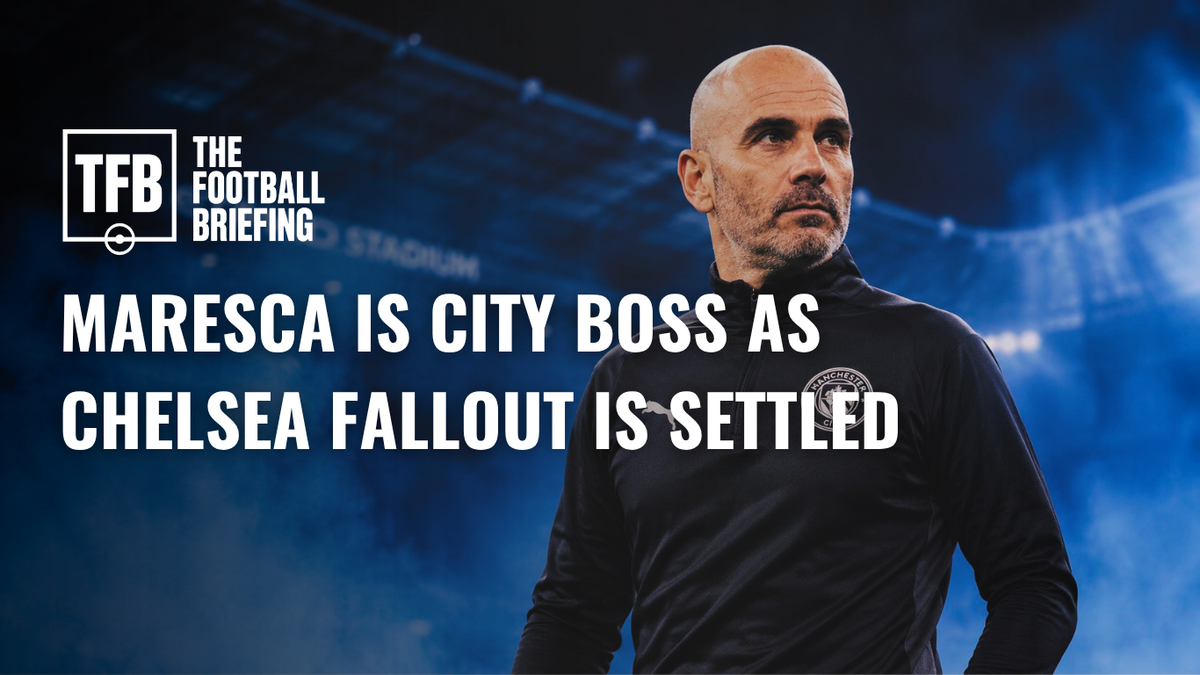
Manchester City have confirmed Enzo Maresca as their new manager, ending one long-running rumour and opening the first chapter of the post-Pep Guardiola era.
City have framed the appointment as both a new beginning and a return. Maresca has signed a three-year contract until the summer of 2029, coming back to the Etihad for what the club described as his third spell. He previously coached City’s Elite Development Squad, worked on Guardiola’s first-team staff during the Treble season and has now been chosen to inherit the most successful managerial legacy in the club’s history.
The language of City’s announcement was striking. This was not presented as a leap into the unknown, or as an emotional appointment based on familiarity alone. Chairman Khaldoon Al Mubarak spoke of Maresca returning to an organisation aligned with his ambition, while Ferran Soriano called him the “stand-out candidate” and pointed to his City track record, Chelsea work and Leicester success.
City want this to look planned, deliberate and structurally coherent. That matters because replacing Guardiola is not like replacing any other manager.
City are moving on from a decade in which, by the club’s count, Guardiola won 20 trophies, transformed their standards and became their most successful manager. His era was not simply a collection of medals. It changed the way City trained, recruited, built attacks, controlled matches and measured themselves. The next manager was always going to inherit more than a squad.
Maresca’s appointment makes sense on one level. He knows the club, he knows the demands, and he has worked inside Guardiola’s environment without being only a Guardiola replica. His Chelsea team had its own stresses and contradictions, but it also won the UEFA Conference League and FIFA Club World Cup, achievements acknowledged by Chelsea in their January statement confirming his departure.
That Chelsea statement was brief but revealing. The club said Maresca and Chelsea had parted company while key objectives remained alive across four competitions, including Champions League qualification, and that both sides believed a change gave the team the best chance of getting the season back on track. There was no attempt to disguise the timing. Maresca left mid-season, with Chelsea still playing for major objectives.
City’s later statement gave the fuller context. The club confirmed that Maresca had long been regarded as a candidate within their succession planning and, more significantly, that confidential conversations took place between selected City representatives and Maresca in autumn and winter 2025, while he was still Chelsea head coach.
Those conversations concerned the possibility of him returning to City in a transitional leadership coaching capacity should Guardiola decide to leave.
That changes the tone of the story. What had been treated for months as rumour now sits in the official record. City were not merely reacting to Guardiola’s public departure. They had been preparing for a possible transition long before the end of the season, and Maresca was part of those discussions while still employed by Chelsea.
The December detail is especially significant. In the same statement, Maresca said that at the end of December 2025 he decided to leave Chelsea. He accepted the decision was his, apologised for the disruption caused, and said his resignation opened the path for him to join a club he already knew well. City confirmed that, once terms were agreed with Maresca, they and Chelsea reached a settlement under which Chelsea would receive compensation.
What City have not said is that Guardiola had formally informed them by December that he was definitely leaving. That distinction matters. The official wording is careful: the Maresca conversations were connected to a possible return should Guardiola decide to go. But Guardiola later said his decision to step down was not sudden, describing it as a process he had felt “for a while”.
Taken together, the two accounts suggest City were treating succession as a live operational issue months before the public farewell.
There is nothing unusual about an elite club planning for the departure of a transformational manager. City would have been negligent not to. Guardiola’s longevity made the succession question unavoidable. The interesting part is that City’s own statement now places Maresca inside that planning before Chelsea’s season had reached its decisive phase.
That creates an awkward tension around the appointment, even if the settlement with Chelsea draws a formal line under the matter. City get the continuity candidate they wanted. Maresca gets the job that clearly appealed to him. Chelsea are left with official acknowledgement from City that his mid-season departure was disruptive.
All three positions can be true at once.
The football task begins quickly. Maresca’s first week at City will be about control rather than theatre. He does not need to win the room with grand statements. He needs to establish where Guardiola’s methods remain useful, where the team requires fresh energy and which relationships need immediate attention.
The first job is internal alignment. Maresca has to sit with the football leadership and clarify the summer plan: which areas of the squad need work, which younger players should be given a route into pre-season and how much tactical change the group can absorb at once.
City’s appointment piece made clear that he will be given support, but support still has to become decisions. A new manager’s first week is often less glamorous than supporters imagine. It is calendars, staffing, individual conversations, fitness reports, recruitment meetings and tactical principles reduced into language players can understand.
The second job is emotional. Guardiola’s departure leaves a vacuum, even at a club as settled as City. Players who have spent years hearing one voice now need to trust another. Maresca’s advantage is familiarity; he is not arriving as a stranger to the building. His challenge is that familiarity can create its own trap. Sound too much like Guardiola and he risks looking like a caretaker of someone else’s ideas. Move too quickly away from Guardiola’s structure and he risks disturbing the system that made him attractive to City in the first place.
The balance will be subtle. City do not need a revolution in the opening week. They need Maresca to define the next layer of evolution. That might mean small adjustments to the rhythm of build-up, different profiles in advanced midfield zones, or a slightly altered relationship between full-backs, central midfielders and wide players.
The details will emerge once training begins, but the broad question is already clear: how does Maresca make City feel renewed without making them feel unfamiliar?
The third job is reputational. Maresca arrives with the Chelsea episode attached to him. City’s statement was unusually direct in acknowledging both the conversations and the disruption caused by his departure from Stamford Bridge. That will not dominate the season if the football is good, but it cannot be ignored during his first days.
His best response is not to relitigate the timeline. It is to project clarity, humility and focus. He has already apologised to Chelsea through City’s statement. Now he has to move the conversation back to coaching.
There is also the question of pressure. Guardiola’s final public messages were generous towards the club’s future, and he said his successor would receive unconditional support from City’s hierarchy. That support will help, but it will not soften the comparison. Maresca is following a manager whose name is now attached to a stand at the Etihad Stadium. Even successful football can look diminished when placed next to Guardiola’s peak.
The early weeks, then, will ask for perspective. City have appointed Maresca because they believe the structure is strong enough to survive the departure of its defining coach. Maresca has accepted the job because he believes he can add to that structure rather than be swallowed by it. The official statements from City and Chelsea have also given the appointment a sharper political edge than a normal managerial handover.
Still, the central story is football. City have chosen continuity, but not stasis. They have chosen a coach formed partly inside Guardiola’s world, but one who has since lived through promotion pressure, Chelsea pressure and the complications of managing a young, expensive squad.
The first week will not decide whether the appointment works, but it will set the tone: with the players, with the staff, with the supporters and with the lingering questions around how early this succession truly began.
Maresca does not have to replace Guardiola in any emotional sense. Nobody can. His task is more practical and probably more interesting: to protect the standards of the last decade while persuading City that the next version of themselves can still belong to him.