Scotland’s World Cup Was a High, a Warning and a Missed Opportunity
Scotland’s World Cup campaign deserves neither a parade nor a public inquest. It sits somewhere more complicated, and more useful, than either extreme.

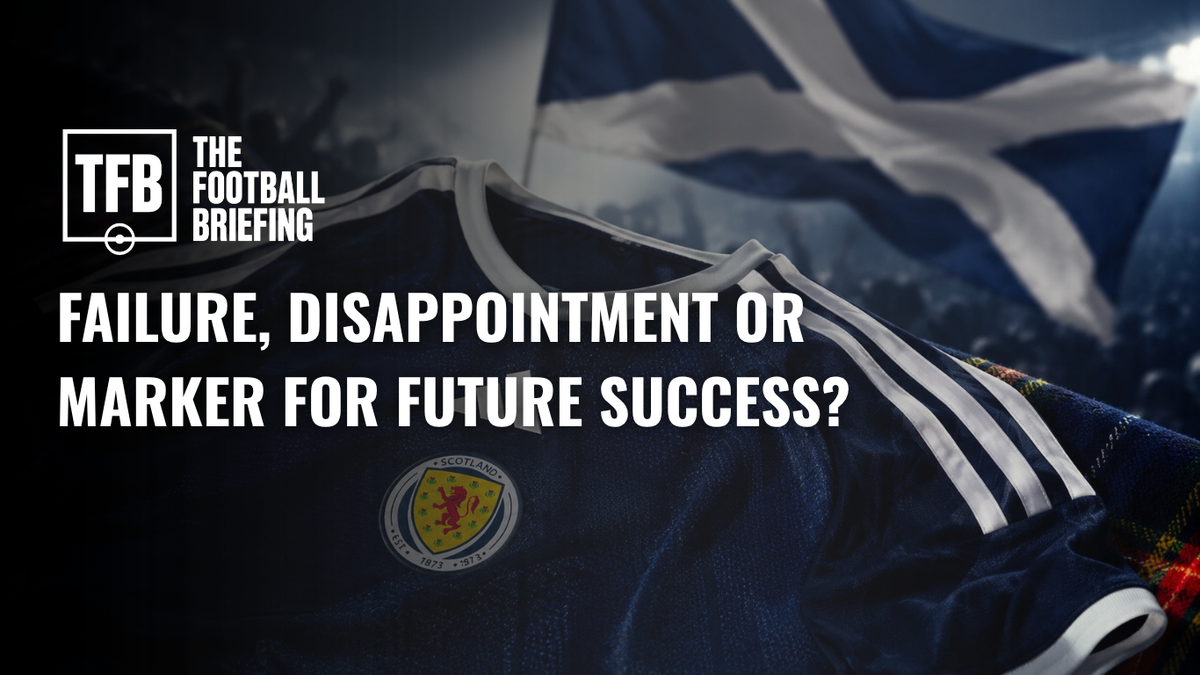
Scotland’s World Cup campaign deserves neither a parade nor a public inquest. It sits somewhere more complicated, and more useful, than either extreme.
Qualification itself was a genuine national high. Scotland reached the World Cup for the first time since 1998 after a dramatic 4-2 win over Denmark at Hampden, a night that carried the emotional weight of nearly three decades of absence. Their opening 1-0 win over Haiti then gave Steve Clarke’s side Scotland’s first World Cup victory since 1990, with John McGinn scoring the decisive goal. Those things matter. For a country that has spent too many summers watching other nations live out the tournament experience, simply being present again was not empty symbolism. It was progress.
Yet tournaments are not judged only by the journey to get there. Once Scotland had beaten Haiti, the campaign changed shape. Survival was no longer the only target. The Morocco game became the hinge point, and that is where the disappointment lives.
A 1-0 defeat to Morocco was not a disgrace. Morocco are a serious, athletic, technically secure side with recent World Cup pedigree. But Scotland did not need to dominate that match to take something from it. They needed composure, a cleaner start and more threat in the final third. Instead, Ismael Saibari scored after 71 seconds and Scotland spent too much of the game trying to recover emotional and tactical balance. Reuters reported that Morocco “dominated the match despite the narrow scoreline”, while The Guardian described Scotland as blunt even while they remained alive late on.
That is the difference between a campaign that feels historic and one that feels slightly undercooked. Scotland did the hard part by qualifying. They did the necessary part by beating Haiti. But they did not quite do the mature tournament part: turning a winnable, awkward second game into at least a point.
Brazil was always likely to be a different level. There is no shame in losing to a side with Vinicius Junior, Neymar returning and the attacking depth Brazil possess. The problem was not simply the defeat. It was the manner and the consequence. Brazil won 3-0, Vinicius scored twice and Matheus Cunha added the third, leaving Scotland reliant on the third-place table and damaged by goal difference.
That brings the campaign back to its central question: failure or foundation?
The fairest answer is that it was not a failure in historical terms, but it was a disappointment in footballing terms. Those two things can both be true.
Scotland’s biggest shortcoming was obvious: they lacked a reliable goalscorer at this level. McGinn’s deflected winner against Haiti was a huge moment, but it also underlined the problem. Scotland’s goal threat came from midfield instinct, set-piece pressure, second balls and moments around the box rather than from a forward who looked capable of repeatedly occupying elite centre-backs and converting half-chances.
That is not a criticism of effort. It is a squad-construction issue. At World Cups, smaller nations can survive without dominating possession, but they usually need at least one ruthless attacker: someone who turns territorial spells into goals, punishes mistakes, or gives the rest of the team belief that one chance may be enough. Scotland did not have that. Che Adams, Lawrence Shankland and the wider attacking group worked, pressed and competed, but the campaign never felt like it had a natural penalty-box finisher waiting to tilt a game.
The Haiti match hinted at the issue before the Morocco and Brazil defeats confirmed it. Opta Analyst recorded Haiti having more shots than Scotland, 15 to nine, and edging the expected goals battle despite Scotland winning the game. That was a warning dressed up as a celebration. Scotland found a way through, but they did not establish a level of attacking control that could be carried into stronger opposition.
The second problem was Scotland’s vulnerability to pressure early in games. Against Morocco, the early goal changed the emotional temperature immediately. Against Brazil, an early Scottish mistake helped Vinicius put Brazil ahead in the seventh minute. At this level, those moments are brutal. Scotland are well organised under Clarke, but tournament football punishes hesitation, loose distances and poor first contacts with a severity that European qualifying does not always replicate.
The third issue was technical security. Scotland have excellent professionals and several players operating at a high club level, but against Morocco and Brazil they looked short of players who could receive under pressure, turn out of trouble and move the game forward without forcing it. That is where the midfield balance became difficult. McGinn and Scott McTominay give Scotland power, timing and box threat, but the team still lacked a conductor who could slow matches down when the opposition momentum rose.
Clarke’s own post-Brazil comments pointed towards the wider structural gap. He spoke about the physicality, power and technique of Morocco and Brazil, and said Scotland had to improve at producing young players capable of thriving on the world stage. That was not an excuse. It was probably the most important lesson of the campaign.
There were still positives. Ben Gannon-Doak’s involvement against Haiti gave Scotland directness and fearlessness. The squad showed resilience in qualifying and did not collapse after the Morocco setback. The support was extraordinary, and that matters because national teams are emotional projects as well as tactical ones. A generation of Scottish supporters saw their team back at the World Cup and saw them win a match. That should not be dismissed as sentimental fluff.
But future success will not come from emotion alone. The next step for Scotland is clear: they need to become more dangerous without becoming reckless.
That means developing forwards who can score at international level, but it also means creating a team structure that gives those forwards better service. Scotland often depend on wing-backs, midfield runners and set plays. Those are useful weapons, not a complete attacking identity. At major tournaments, the best smaller nations usually have one of two things: either a compact defensive block with devastating transition speed, or enough technical midfield quality to keep the ball for spells and drain pressure. Scotland had elements of both, but not enough of either.
Recruitment and player development are part of the answer. So is tactical evolution. Clarke has restored credibility and tournament regularity, but the question now is whether Scotland can move from being hard to beat in qualifying to being difficult to contain at finals. That requires more bravery in possession, more pace in advanced areas and more quality between midfield and attack.
So was this World Cup a marker for future success? It can be, but only if Scotland treat it honestly.
The danger is romanticising qualification so much that the football lessons are softened. The opposite danger is dismissing the entire campaign because of two defeats. Scotland should resist both. This was a milestone, but not a ceiling. It was a reminder that the country can still create huge football moments, but also that the gap to the teams who expect to shape tournaments remains significant.
The Morocco defeat will sting because that was the match where Scotland could have changed the story. The Brazil defeat will sting because it exposed the margin between competing and surviving. But the Haiti win will endure because it gave Scotland something tangible: proof that they can return to the World Cup and win.
The verdict, then, is balanced but firm. Scotland’s campaign was not a failure. Getting there mattered. Winning once mattered. Giving supporters a World Cup to live inside mattered. But it was a disappointment because the opportunity was bigger than merely being there.
For Scotland, the real success will be measured by what comes next. If this campaign leads to better forwards, braver possession, sharper tournament management and a stronger pathway for young players, it will be remembered as the start of something. If not, it will become another fond, frustrating Scottish summer: loud, emotional, historic in moments, but ultimately short of the level required.