Why Elliot Anderson could become the defining midfielder of Manchester City’s next era

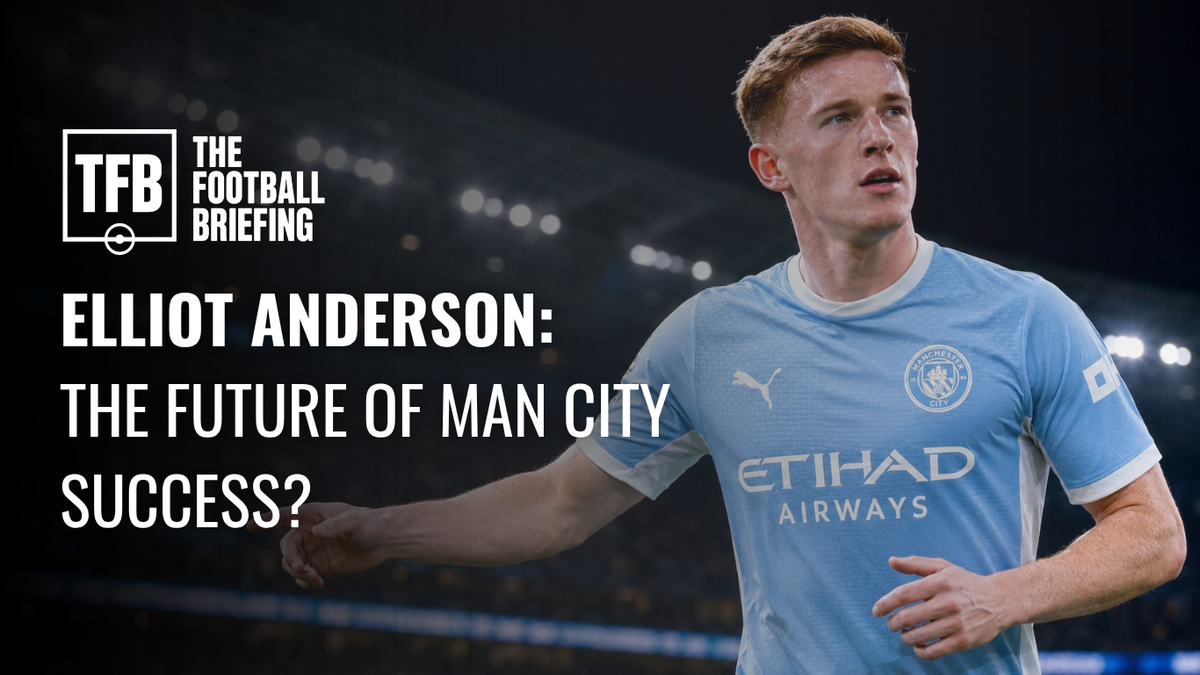
Fabrizio Romano’s trademark “Here we go” rarely arrives without weeks of expectation. Yet confirmation that Manchester City have reached an agreement to sign Elliot Anderson from Nottingham Forest still lands as one of the summer’s biggest statements.
Multiple outlets, including Reuters citing BBC reporting, say City have agreed a club-record deal worth around £116 million, with the England international expected to complete a medical in the United States before signing a long-term contract.
The headline will inevitably be the fee. The more revealing story is what City believe they are buying. This is not simply another technically gifted midfielder. Anderson offers intensity, durability and positional flexibility, wrapped inside a player who still appears to be climbing towards his ceiling.
From Newcastle prospect to Premier League leader
Few players have improved their reputation as quickly.
Two years ago, Anderson was fighting for minutes at Newcastle United after returning from an impressive loan spell at Bristol Rovers. Eddie Howe trusted his ability, but opportunities were limited in one of the Premier League’s strongest midfields.
His £35 million move to Nottingham Forest changed that. Forest did not sign Anderson to rotate; they handed him responsibility. He started virtually every Premier League match, became central to their build-up and pressing, earned England recognition and established himself during the World Cup.
The numbers tell part of the story. Watching him tells the rest.
He is not a traditional No.6
Calling Anderson a defensive midfielder misses the point. He can play there. His tackling, recoveries, duel success and willingness to defend make him a credible option at the base of midfield.
But he looks most influential as a hybrid No.8. He drops to receive from the centre-backs, carries through pressure, supports attacks, presses immediately after possession is lost and still recovers quickly enough to defend transitions.
The best sides increasingly favour midfielders who contribute across every phase rather than specialists confined to one role. That is the profile Anderson has developed.
Why he makes sense for Manchester City
The obvious comparison is Rodri. It is also the wrong one.
Rodri controls matches through positioning and tempo. He slows games down and dictates where possession travels before opponents can react. Anderson plays at a different rhythm. He carries the ball more willingly, attacks space more aggressively and injects greater intensity into games.
Rather than replacing Rodri stylistically, he gives City another way of controlling matches.
Whether City remain in a 4-3-3 or continue evolving, Anderson offers several solutions.
Option one: Advanced No.8
This feels like his natural position. Playing ahead of the holding midfielder allows him to arrive late in attacking areas while maintaining his defensive workload. His engine supports repeated forward runs without leaving City exposed.
Option two: Double pivot
Against stronger opponents, City have often used two deeper midfielders. Anderson has the athleticism to cover large spaces and the security in possession to support City’s build-up.
Option three: Rotating holding midfielder
Perhaps the most intriguing option. Rather than asking Anderson to replicate Rodri, City could use him as a more mobile holding midfielder, stepping forward to press while defenders adjust behind him. His defensive output suggests that role could develop naturally over time.
The statistic that matters most
Goals, assists and passing accuracy always attract attention. Availability matters just as much.
Last season Anderson started 37 Premier League matches and played more than 3,300 league minutes. For clubs competing across four competitions, reliability is a tactical asset. Systems are built around players managers expect to have every week.
City have experienced how disruptive injuries can become. Anderson offers elite-level availability alongside tactical intelligence.
What he adds without the ball
Manchester City’s possession often overshadows what happens when they lose it. Some of their best sides recovered the ball within seconds. That demands relentless physical output.
This is where Anderson excels. His pressing is rarely reckless. He closes passing lanes while staying balanced enough to recover if opponents play through the first wave. His duel numbers and recovery statistics reflect that.
Despite standing 179cm, he also wins an impressive number of aerial contests, adding another layer to City’s defensive options around second balls and set-pieces.
There is still room to grow
Perhaps the most exciting part of this transfer is what Anderson has yet to become.
His final-third output should continue to improve. Four Premier League goals and four assists represent solid rather than elite production. He creates opportunities without consistently deciding matches himself.
City’s positional play has long increased the attacking output of midfielders. Ilkay Gündogan showed how dangerous intelligent late runs into the box can become. If Anderson develops similar timing, his numbers should rise.
The pressure of the price tag
The fee changes expectations. Supporters will expect immediate impact from the most expensive signing in the club’s history.
Midfielders rarely develop that way. For all the focus on £116 million, Anderson’s greatest value may become apparent over five seasons rather than five months.
This feels less like a reaction to the present than an investment in City’s next midfield.
A different kind of Manchester City midfielder
The Premier League has watched Kevin De Bruyne dominate through creativity, David Silva through intelligence, Yaya Touré through power and Rodri through control.
Anderson blends elements City have rarely combined in one midfielder. He runs relentlessly without sacrificing technical security. He embraces the defensive side of the game without limiting his influence in possession. That helps explain why Nottingham Forest fought to keep him and why Manchester City were prepared to make him their record signing.
Transfers of this size are usually remembered for the fee. This one may eventually be remembered for something else—not as the deal that brought Manchester City another midfielder, but as the moment they found the player to lead the next evolution of their midfield.